
The military likely has some of the most high-tech vehicles. Every year, a large portion of taxpayers’ money is spent on developing these machines. Although the market is already saturated with impressive car models, we are pretty sure they are not comparable with what the military has. At present, the following vehicles are just unrivaled. Get ready because you are about to be blown away by the coolest machines technology can make.
BAE Systems Adaptive Technology
BAE Systems developed Adaptiv, camouflage technology that allows military vehicles to go undetected by infrared night vision devices. It heats and cools its hexagonal Peltier plates quickly to form the image it wants, like a natural background or a non-target object. In 2011, BAE Systems announced the technology, likened to a “thermal TV screen.” A thousand hexagonal panels are needed to cover an armored vehicle’s sides.
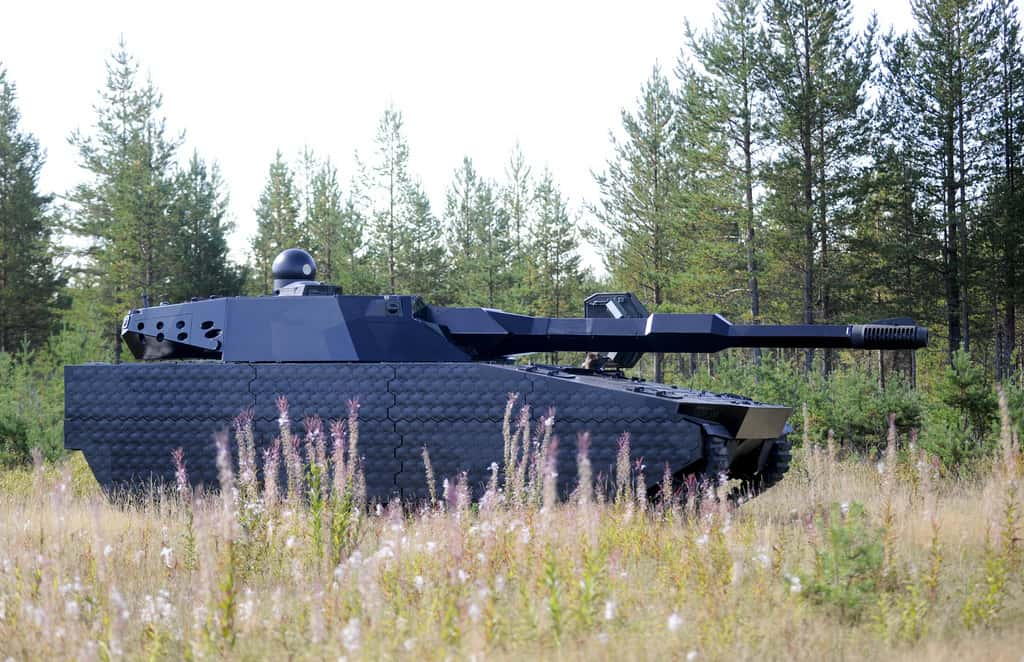
BAE Systems Adaptiv Technology
WildCat Robot
We would be afraid if we came across one of these robots in the wild. Boston Robotics created the WildCat robot, which can run on any terrain. The robot is truly amazing, but what makes it even more impressive is its capability to carry intelligence or cargo. In any case, it is enough to terrify anyone. Just imagine seeing the WildCat running across dunes and heading in your direction!
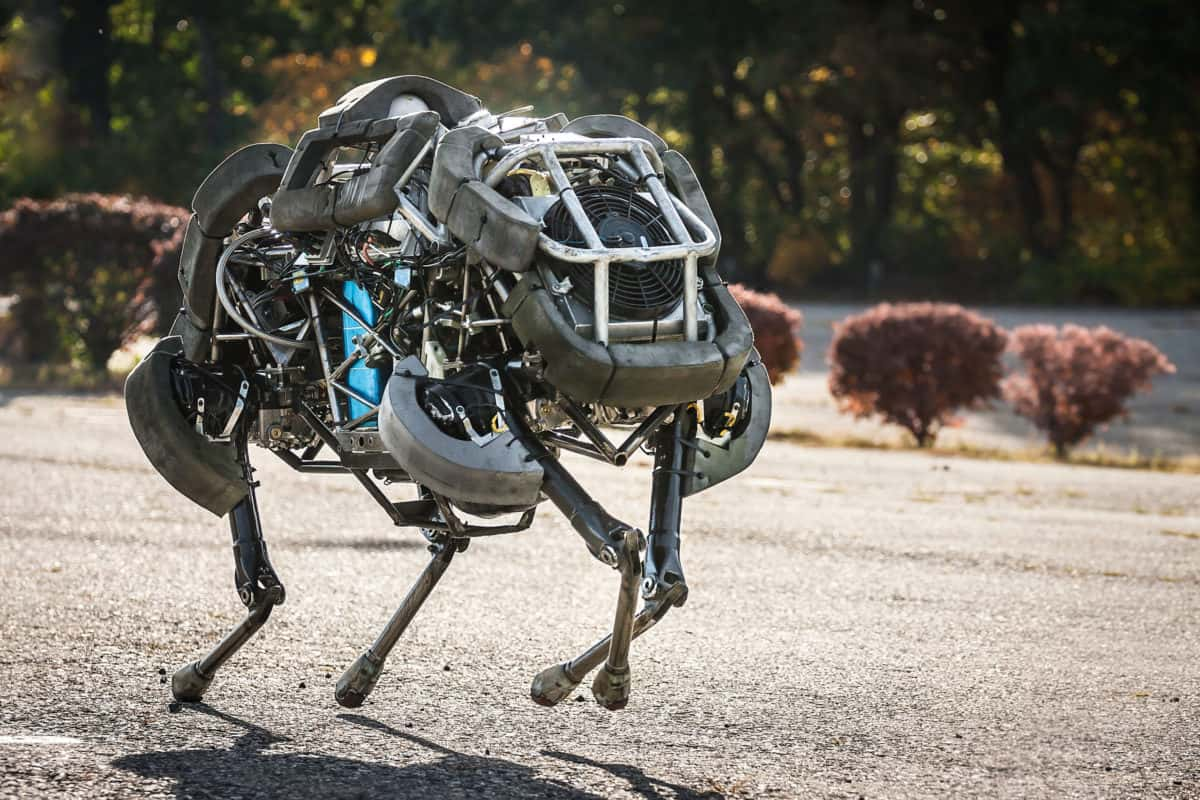
WildCat Robot
Arquus Scarabee Armored Vehicle
Arquus, a company under Volvo, introduced this beast at the Paris Air Show in 2019. At that time, it was announced that this light armored vehicle was set to be on active duty shortly. The Scarabee has a combination of an electric motor and a diesel engine. This allows it to operate silently. It is definitely useful for stealth and reconnaissance missions as it is capable of a long, silent watch even with all systems on.
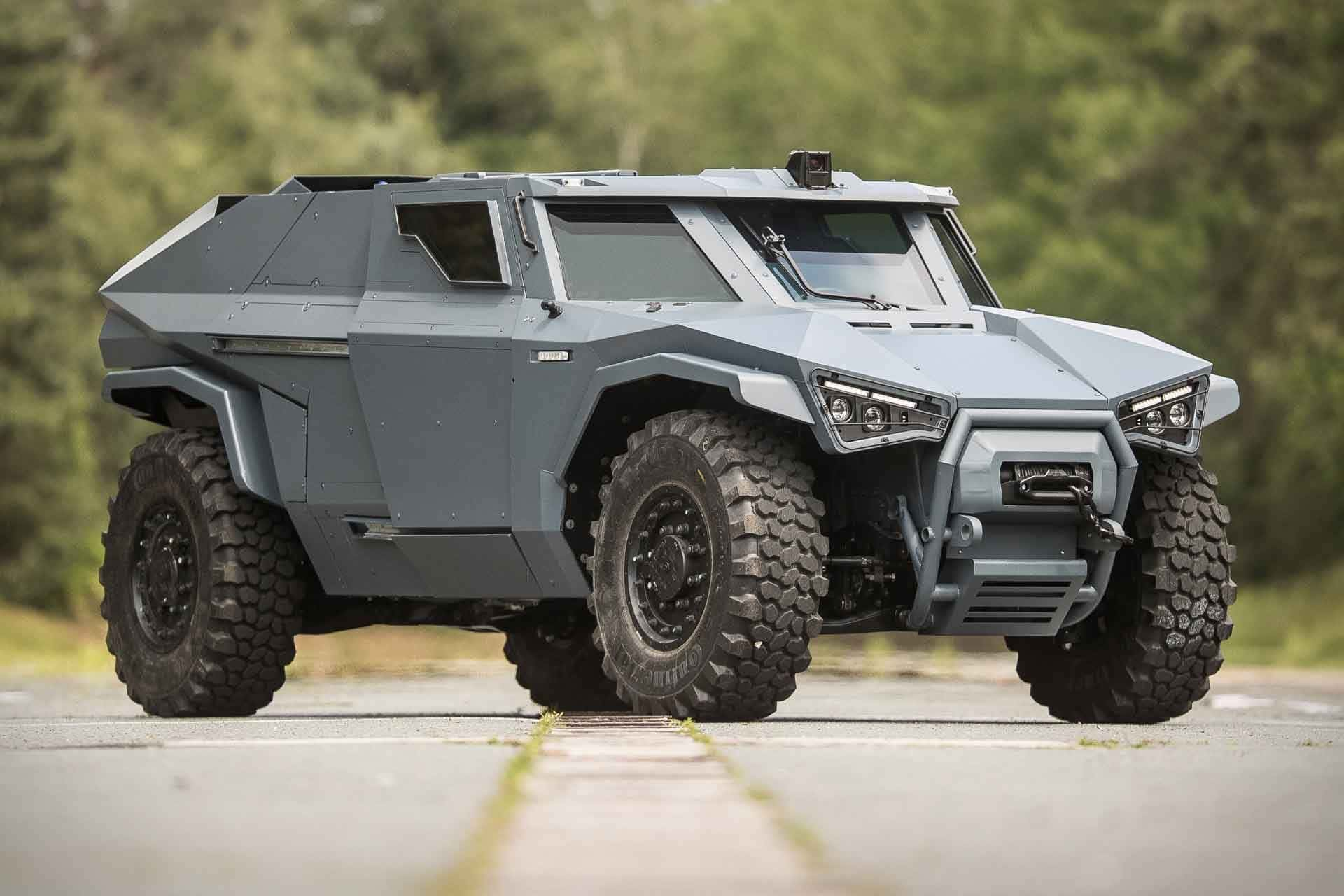
Arquus Scarabee Armored Vehicle
Owl-Eye Drone
You will only find this in Russia! According to reports, Russian intelligence agencies have done a few tests on different radar drones. The goal is to make something that would not be seen as a machine! It is said that the owl drone weighs only five kilograms and can fly distances of up to 12 miles for 40 minutes. The company that developed this drone also made a falcon drone.
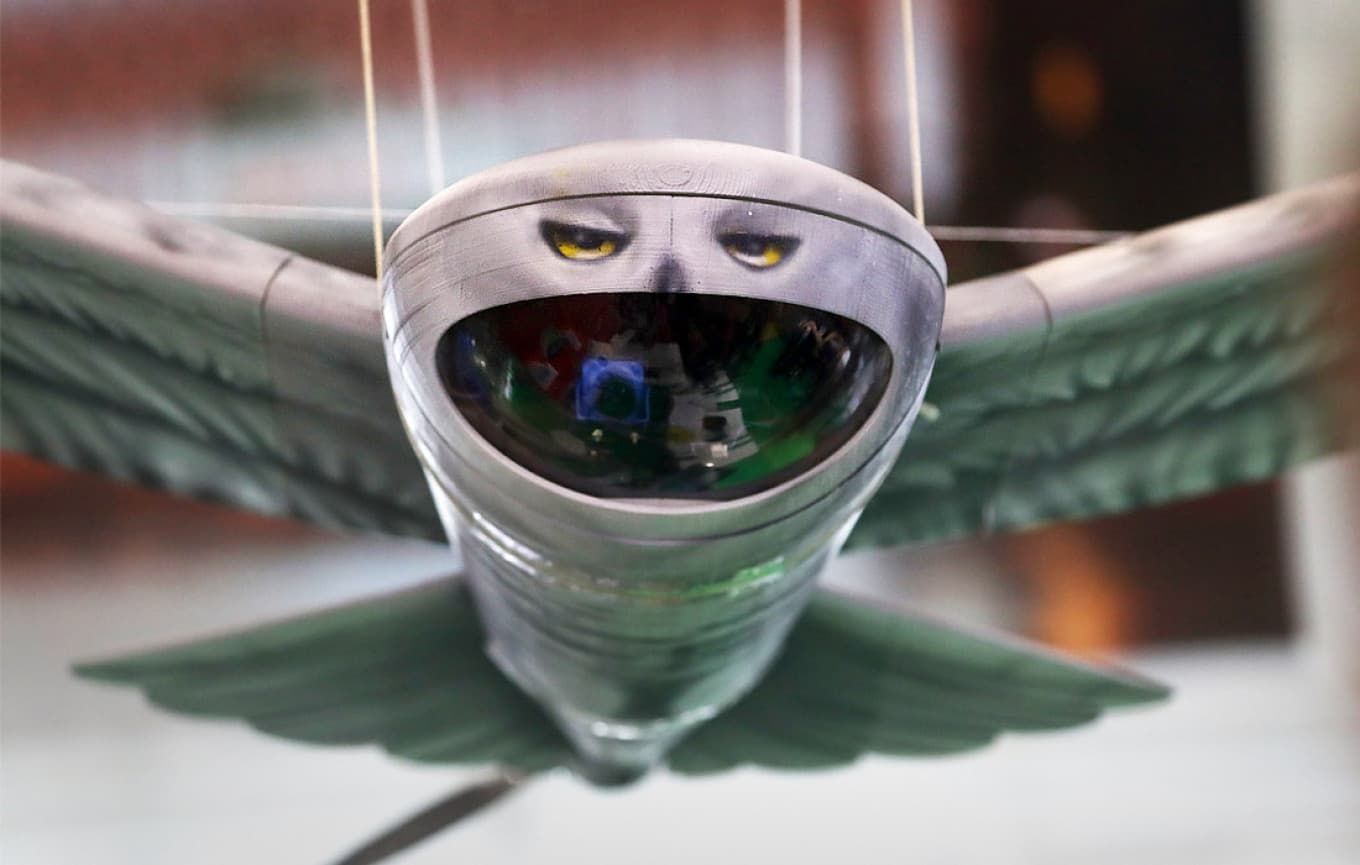
Owl-Eye Drone
Army Rotorcraft Technology
Currently, the Army is testing various aspects of rotorcraft tech, which includes surviving combat violence. ARL-SLAD aviation analysis team leader Brian G. Smith explained, “The purpose of this program is to generate some limited ballistic data that could reduce risk and/or encourage Future Vertical Lift designers to consider CTEF technology.” This cutting-edge technology may reduce vibration, reduced noise signature, enhanced rotor performance, and more efficient helicopter flight control.
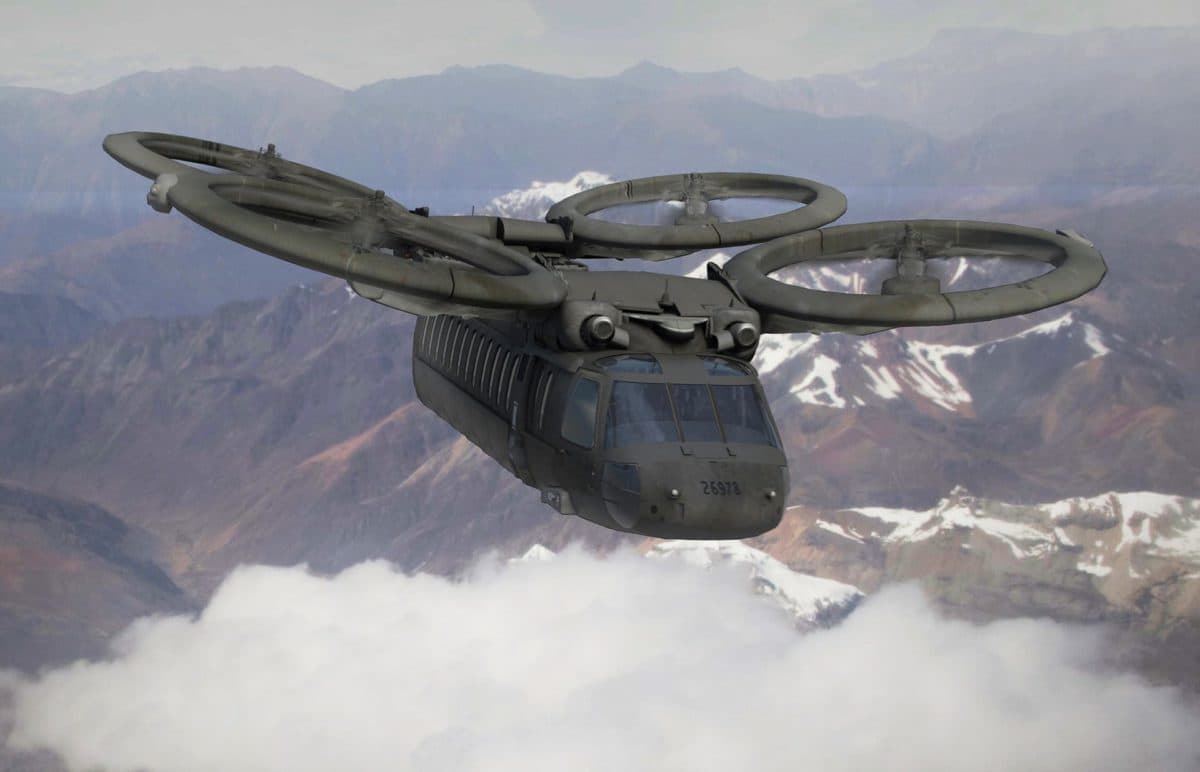
Army Rotorcraft Technology
Saab Globaleye
Saab’s defense and security division produced GlobalEye, which performs numerous roles. Together with the Erieye ER radar and mission system, the airborne platform has a suite of sensors, and it is used in the long-range business jet Bombardier Global 6000. The bottom line is that it is an excellent radar that operates from 30,000 feet in the air. Aside from that, its range is 450 kilometers. Not shabby at all!
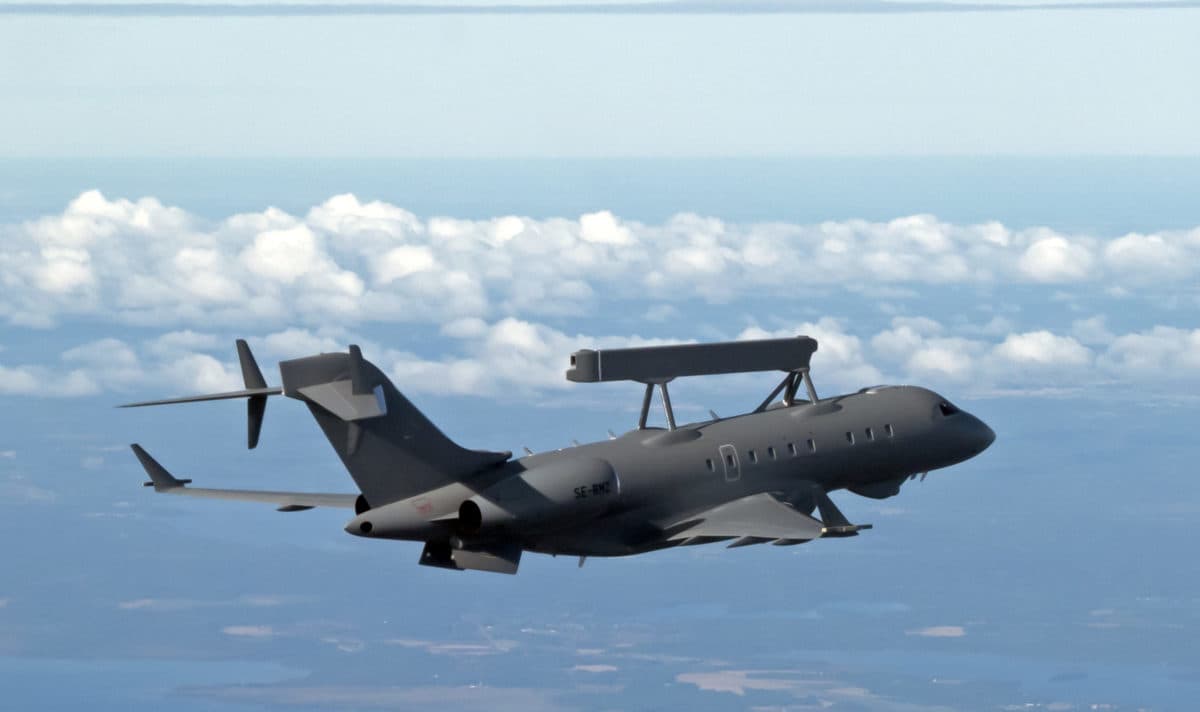
Saab Globaleye
Guardium Unmanned Ground Military Vehicles
This is a compact patrol vehicle capable of hauling 1.2 tons of weapons, sensors, or cargo. The Israeli Defense Forces use it as a force multiplier. Its endurance is the best among all the ground drones globally, as it has a 48-hour cruise or 24-hour combat battery pack. It has a fully autonomous mode, but it can also be operated remotely. A small patrol force can control large patches of territory with the use of this UGCV.
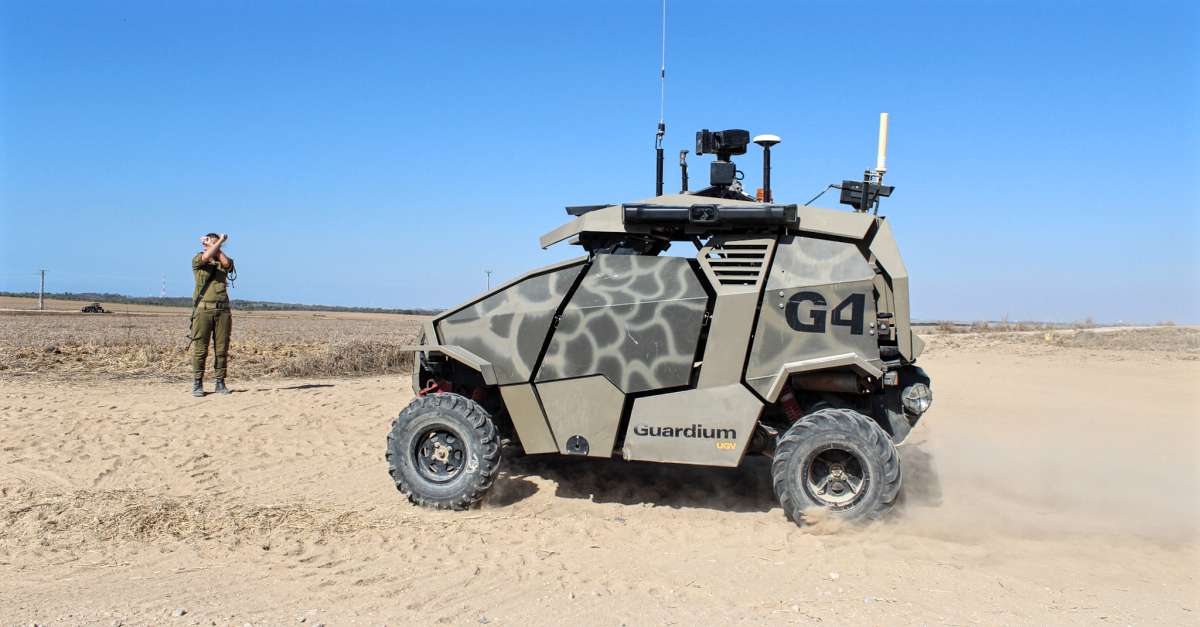
Guardium Unmanned Ground Military Vehicles
TERN Program
The military uses many small uncrewed aerial vehicles, but only some can be used on decks with limited space and rough seas. DARPA’s TERN Program is useful in this situation. TERN stands for “Tactically Exploited Reconnaissance Node,” but we wouldn’t blame you if the name makes you think of a seabird. The program aims to introduce an aircraft capable of landing and taking off on its tail.
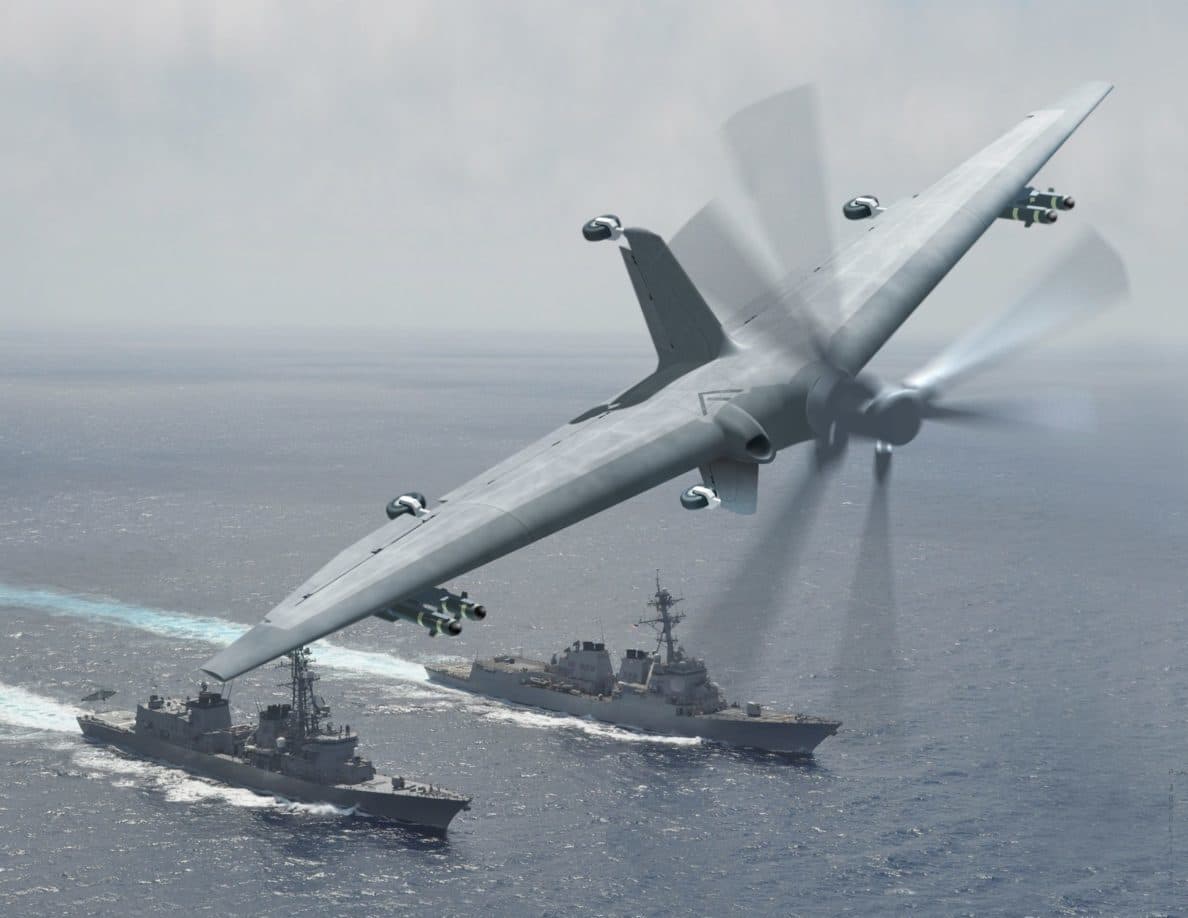
TERN Program
Artillery Gun Module (AGM) Self-Propelled Howitzer
This amazing artillery piece is completely automated and light enough for medium-sized transport planes to transport and airdrop. It has a modular control component and main gun, which can be fitted to different truck and track frames. On top of that, the German design lets the military transform unused supply trucks into very accurate artillery machines even on a budget. What’s more, specialized personnel is not needed to operate the artillery piece!
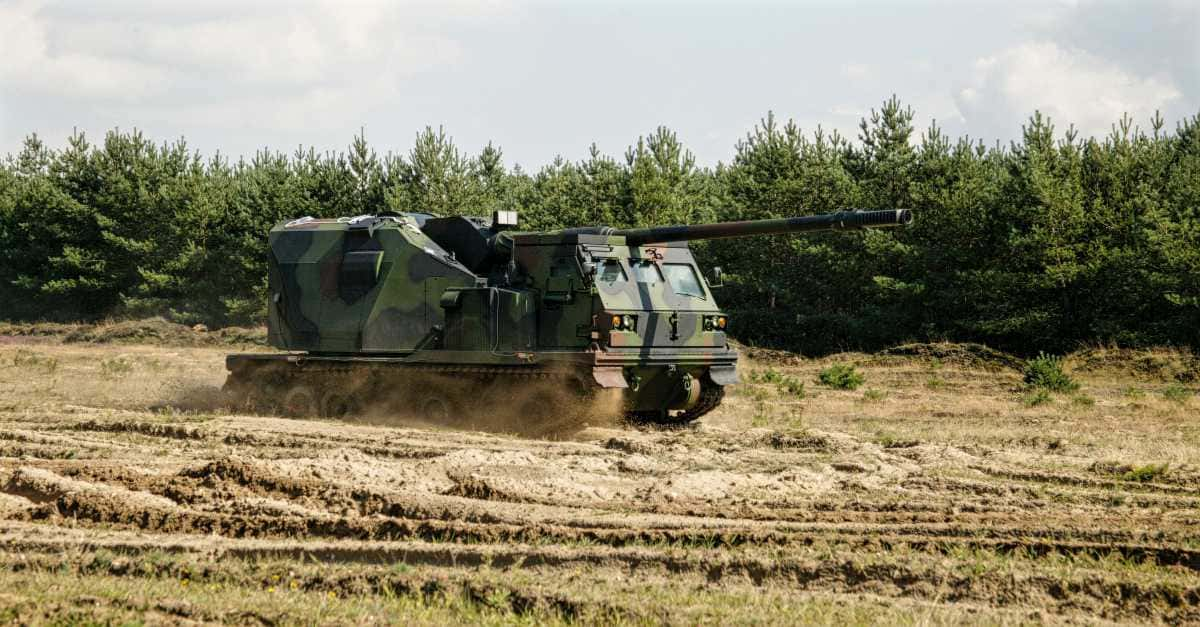
Artillery Gun Module (AGM) Self-Propelled Howitzer
Ghost Fleet Overlord Program
The primary objective of the NAVSEA, or the Naval Sea Systems Command, is to build, purchase, and maintain the fleet of ships and combat systems of the U.S. Navy. Recently, the NAVSEA announced reaching a milestone. One of the Ghost Fleet Overlord’s two test vessels has completed two autonomous transits of 4 days. The transits were 181-hour autonomous operations across 3,200 nautical miles. The Ghost Fleet Overlord program started in September 2019 and is now in its second phase.
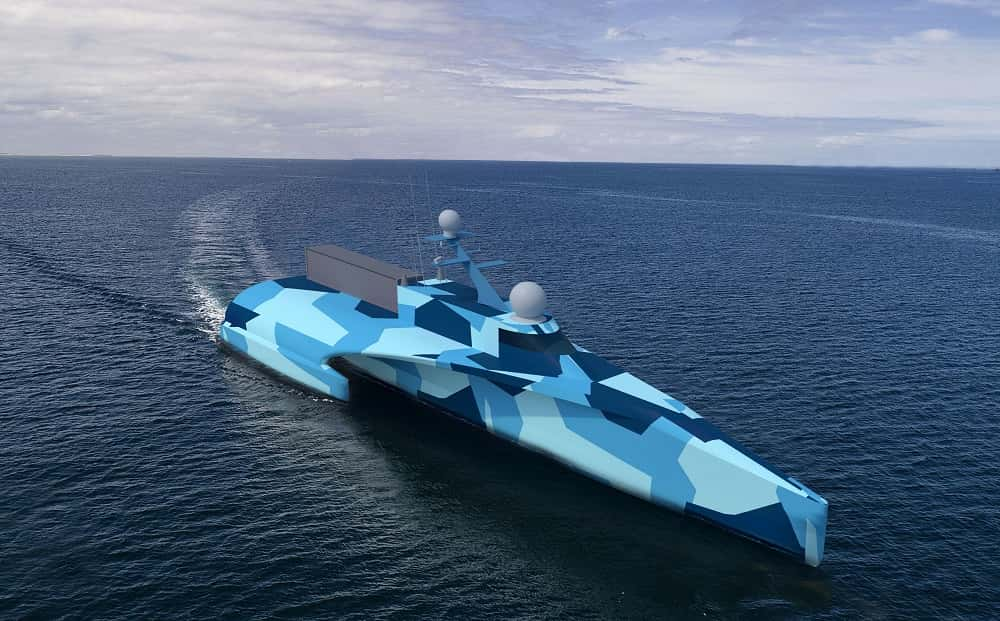
Ghost Fleet Overlord Program
Sea Hunter
You can get more context from its official name, Anti-Submarine Warfare Continuous Trail Unmanned Vessel or ACTUV. It seems National Defenses are keener on quiet submarines which lurk near the shore. Sea Hunter is a quiet, autonomous anti-submarine ship that fills in that void. It was launched in 2016, and it is under the DARPA ACTUV program. Vigor Industrial built the vessel, which is part of a line of experimental ships.
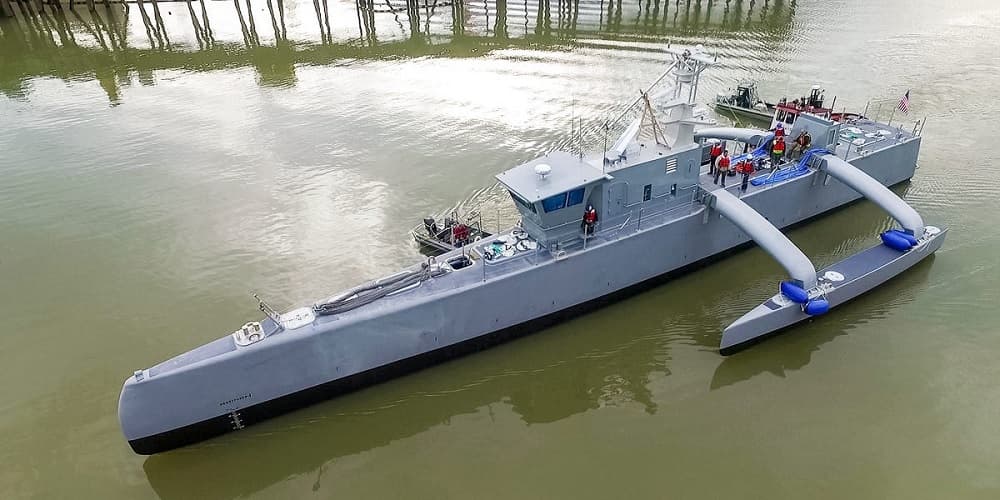
Sea Hunter
Gladiator TUGV
This modified bomb disposal machine was specifically developed for the Marine Corps. The Gladiator has higher maneuverability, better speed, and a longer range than anything that has come before it. Aside from that, it is armored to withstand small arms fire, and it is among the first combat drones in service right now. Also, it has a multi-mission remote battle station that can use anti-personnel and anti-vehicle weapons. In addition, it can mount sensors for reconnaissance and supplies for forwarding troops.
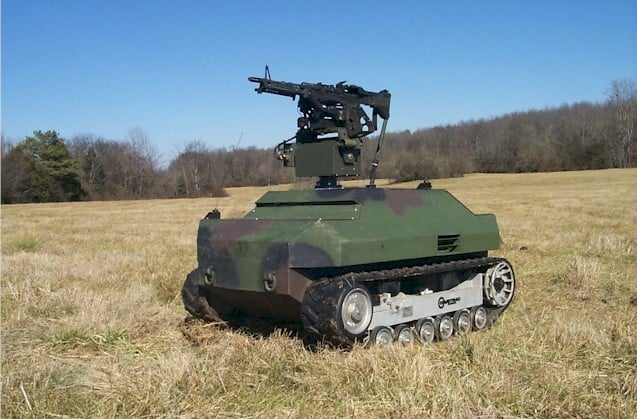
Gladiator TUGV
Northrop Grumman B-21 Raider
It’s impossible not to include the B-21 Raider in this list. The Air Force wanted a modern Long-Range Strike Bomber, so Northrup Grumman started developing this bad boy. While this aircraft will be crewed, it will be a stealth drone bomber capable of flying at high altitudes. Those who oversee its development explained that they want a pilot operating the controls as the aircraft will probably be used for delivering nuclear payloads.
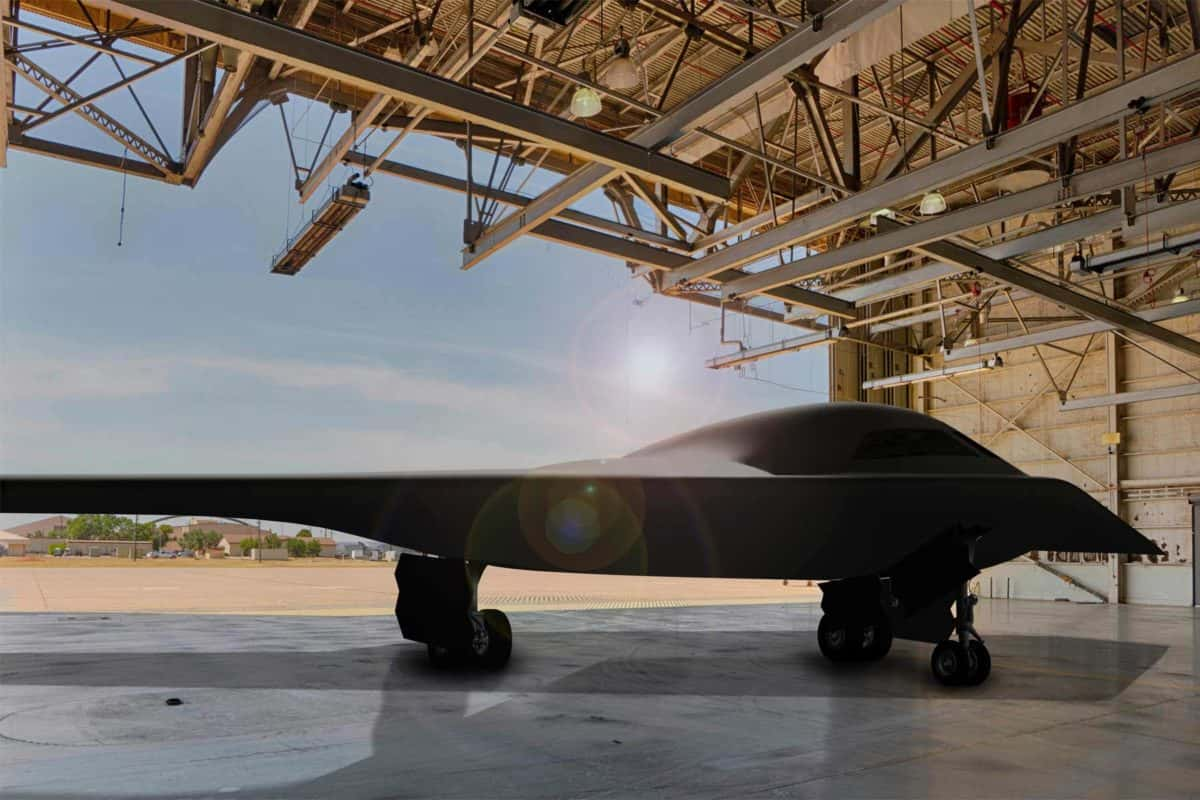
Northrop Grumman B-21 Raider
BigDog Military Robot
Now owned by Google, Boston Dynamics created the BigDog since they wanted to build a force multiplier. This robot can cross various types of terrain without falling over, which is basically its party trick. It can run across sand, snow, desert, and forest without difficulty! This makes the BigDog ideal for delivering supplies and equipment to soldiers in dangerous places for humans and which helicopters can’t reach.
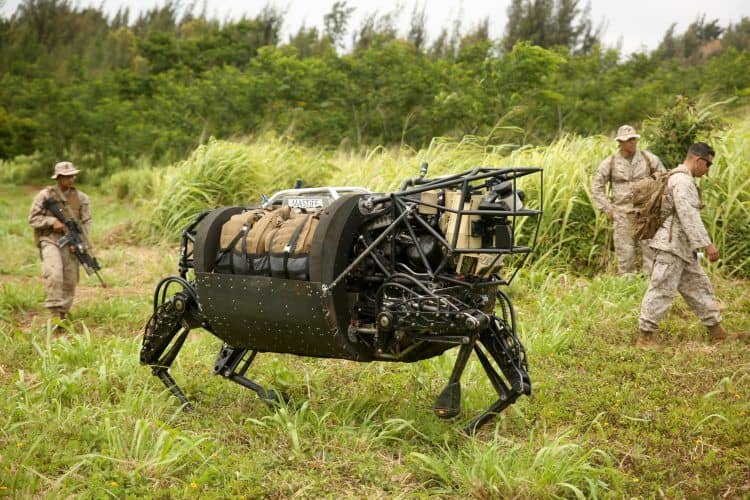
BigDog Military Robot
“RoBattle” Unmanned Ground Vehicle
More than just a utility accessory, this 7-ton drone is well-armed and armored and designed for leading combat formations and attacking the enemy head-on. It has six independent wheels which can be switched with tracks. In addition, you can mount heavy weapons, such as 25 mm Bushmaster cannons and TOW missiles, on its remote weapons station. The whole system is also automated, though the command to fire ultimately comes from a human operator. They did it this way for moral and ethical reasons rather than technical issues.
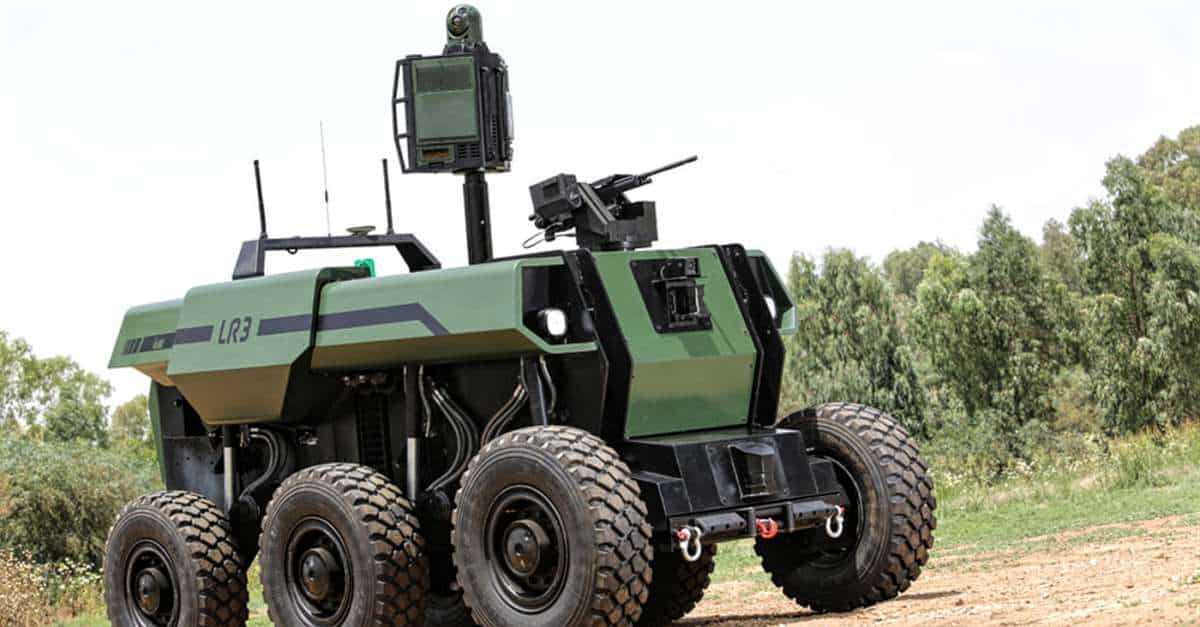
“RoBattle” Unmanned Ground Vehicle
UH-19XRW Hoverwing
Part flying and part hovercraft, the Hovering sports craft’s military version, is a true pioneer. The amphibious “Batmobile” can haul 1,200 pounds of cargo and has a 140-mile range, with a 75-mph max speed. On top of all of that, the hovercraft has the capability to cruise at six feet above the ground. Clearly, this Hoverwing is top of the line, and it has attracted the military’s interest.
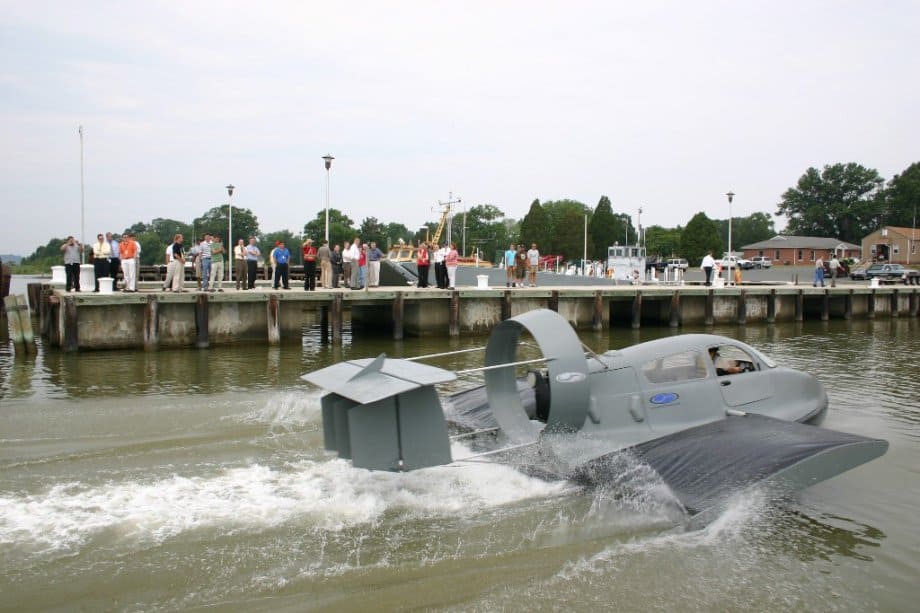
UH-19XRW Hoverwing
Kratos BQM-167A
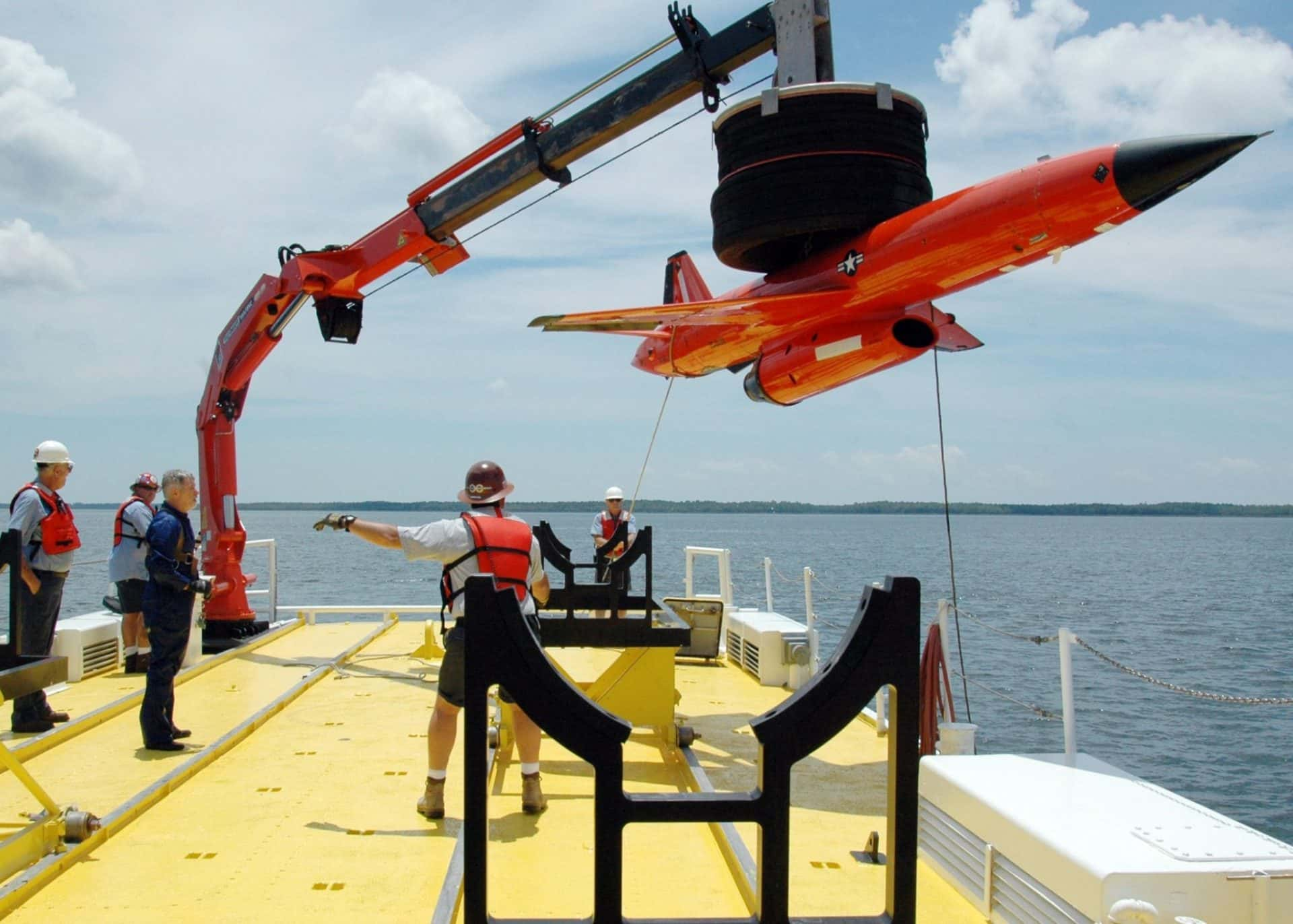
This photo of the BQM-167 has “fighter-like” features similar to 4th Gen fighter mounts. Since it is useful in providing training to airmen regarding the proper release of active weapons, the BQM-167 is definitely valuable. It has a turbojet engine and has a 135-gallon maximum fuel capacity. In addition, it can carry up to five gallons of smoke oil. Composite Engineering Inc. developed and manufactured the BQM-167.
Kratos BQM-167A
Artificial Intelligence
Think more about command, control, and reconnaissance, and intelligence. Weapons are not the only thing that the military has and needs. The truth is that the fourth industrial revolution’s catalyst is artificial intelligence. Defense agencies in various parts of the world are already utilizing artificial intelligence to help them make smart and efficient choices! Military systems equipped with AI can handle larger volumes of data more efficiently than conventional systems.

Artificial Intelligence
Mars 2020 Rover Prototype
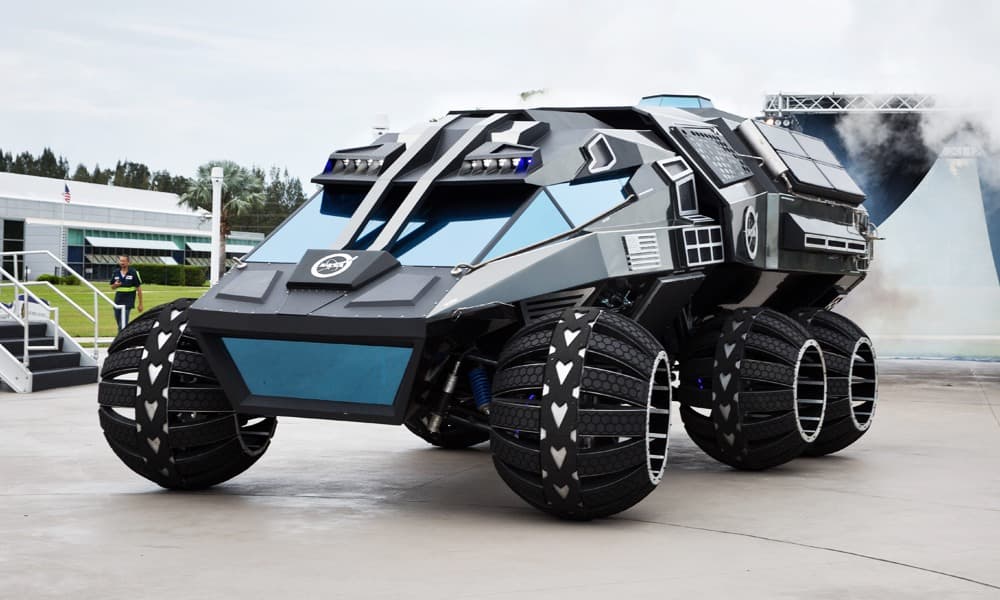
This is a true beauty. In 2017, the space agency unveiled this Mars Exploration Rover prototype at the Kennedy Space Center. This may not be the exact unit that will go to Mars, but it is of the same model and make. The mission will try to find and study an area that may have been habitable before and look for evidence of past microbial life. Doesn’t this look like it belongs in a sci-fi film?
Mars 2020 Rover Prototype
Lockheed Martin SR-72
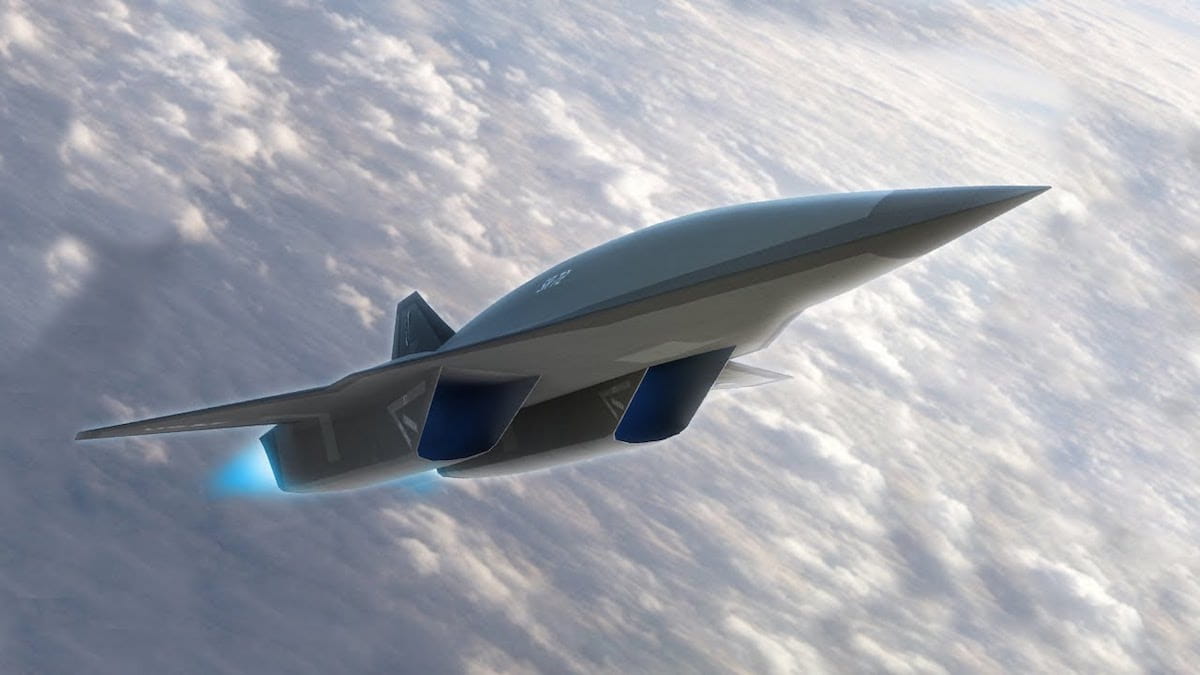
Dubbed the “Son of Blackbird,” the Lockheed Martin SR-72 claims that it will be able to reach any place in the world within only one hour. If you wonder how on earth that would be possible, it is expected that the single-engine autonomous vehicle will reach speeds of over 14,500 mph. Aside from that, the Lockheed Martin SR-72 is intended for surveillance, intelligence, and reconnaissance and is expected to fly by 2023.
Lockheed Martin SR-72
Google Glass
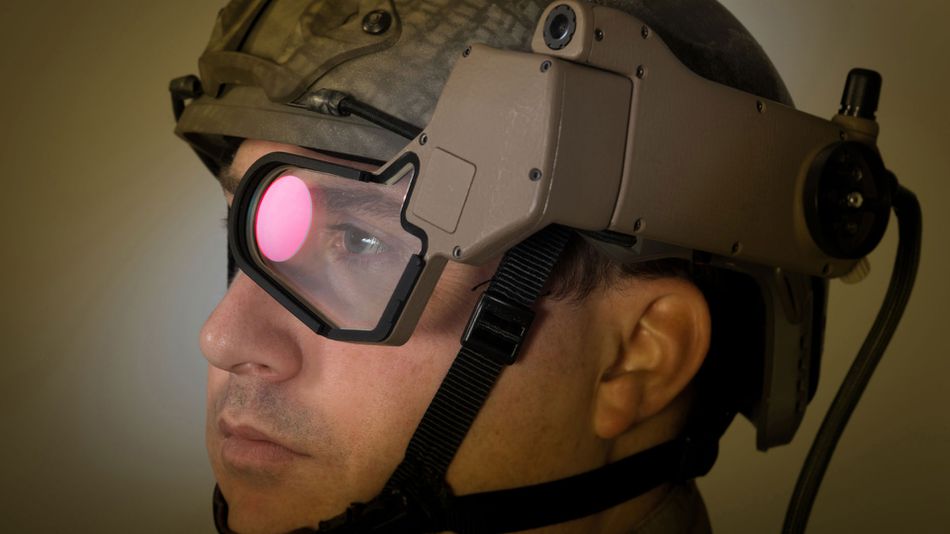
While this is not an incredible military vehicle, it is still included in this list as it is cutting-edge technology that the military uses. Troops on the ground can get pertinent knowledge from Google Glass about their current mission. Its capabilities include measuring distances, transmitting video with a drone, and displaying building layouts in 3D, among others! What makes this really impressive is that all of that can be seen using such a small thing.
Google Glass
The Distributed Aperture System (DAS)
The DAS or Distributed Aperture System allows you to stream real-time images through a helmet. The images come from six infrared cameras placed all over the aircraft. The DAS allows pilots to “see-through” the cockpit or the airframe. On top of that, a night vision mode is available through an integrated camera which the pilots can use. This means the operator can identify and track targets both during the day and at night.
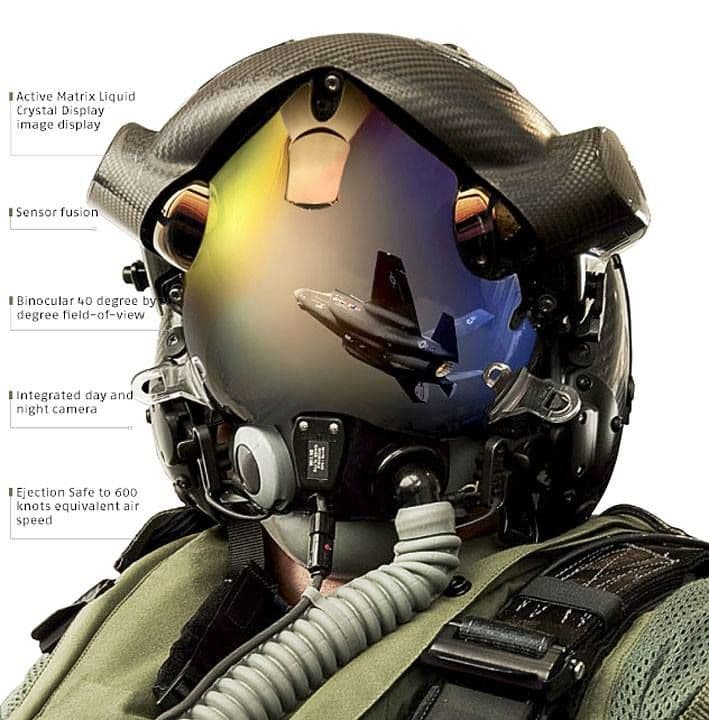
The Distributed Aperture System (DAS)
Festo Camera Ants
You may think this one is a bit far off, but we promise you this is the real deal. Technology has definitely come a long way. Who knew intelligence-gathering camera ants would become a thing? Autonomous or controlled, the point is that these cameras will feed video to a designated access point. What’s more, these artificial ants can communicate with each other and coordinate their actions. That is truly amazing!

Festo Camera Ants
Drone Strike-Downs
UAV (Unmanned Aerial Vehicle) offensives are very much needed to accomplish the goal in terms of counterterrorism. However, it is important to try and find counter-options as technology is developing quickly. We are sure that the time will come when military vehicles can counteract drone strikes. This may happen sooner than later, as there have been reports of drones getting shot down. Counteracting drone strikes is probably high on the priority list.
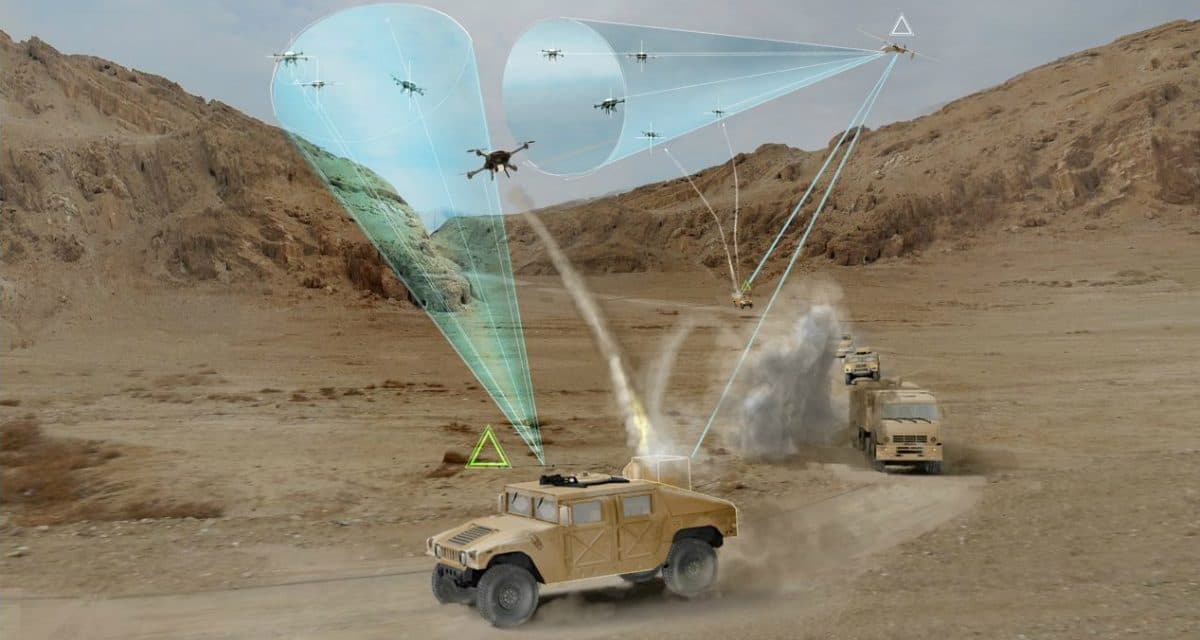
Drone Strike-Downs
Ripsaw MS-1
This unmanned light tank can reach up to 95 mph, which means it is the fastest among tracked military vehicles. The Ripsaw MS-1 is meant to serve as a base chassis for various support military vehicles, armored personnel carriers, and drone tanks. Its core version is among the most nimble and agile armored vehicles on the planet, and each variant costs under a million dollars. We are sure that the Ripsaw MS-1 will soon be deployed in large numbers.
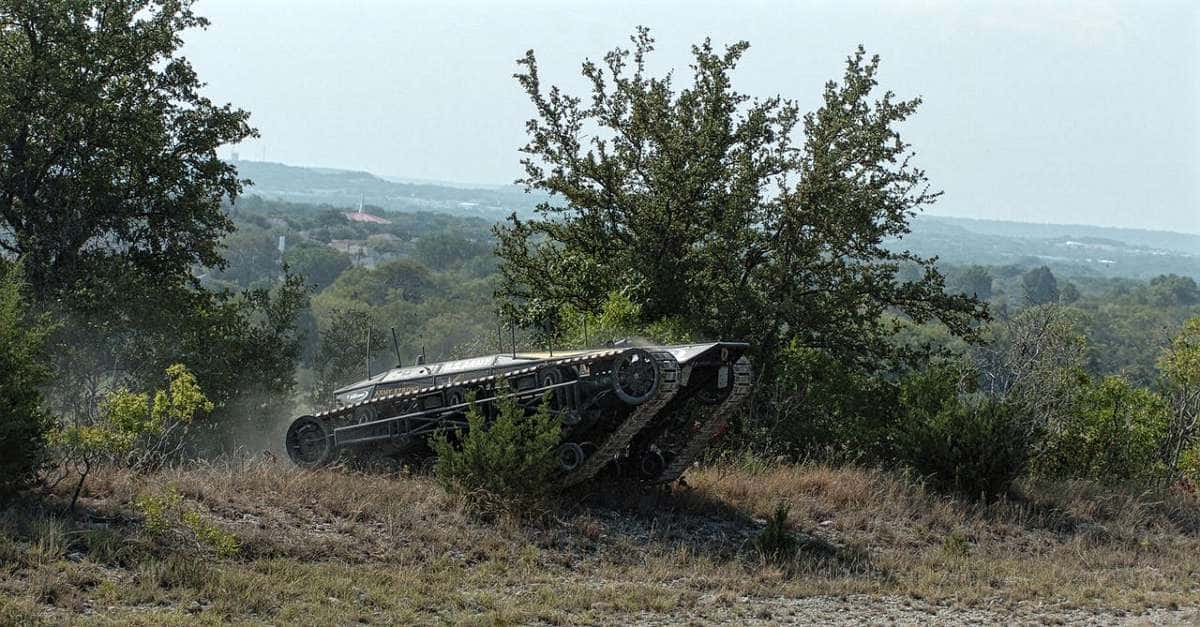
Ripsaw MS-1
Army Futures Command All-Terrain Vehicles
“The Vehicle That Shall Not Be Named” or the Army Futures Command All-Terrain Vehicles has finished undergoing testing at Texas A&M, together with several other ATVs. It did really well in terms of aspects like mobility, consistency, and radar functionality. The vehicles had to do different things in the test, including carrying a 1,000-pound payload while traveling on paved roads, off-road, and over cross-country terrain at 15 to 75 mph.
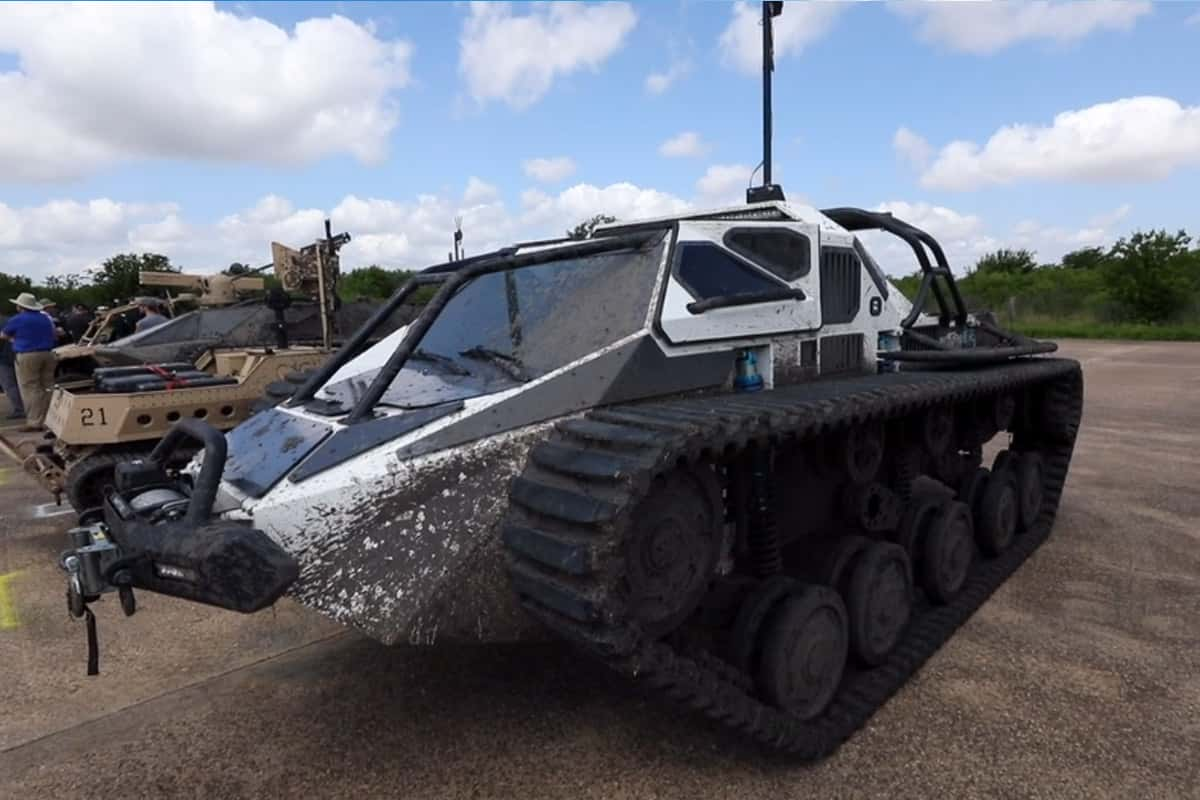
Army Futures Command All-Terrain Vehicles
RT01 Transport Vehicle
Weyland Corp produced the RT Series Group Transport, also called the Rover, as an armored personnel carrier. One of the company’s most popular products is equipped with a wheel system with shape-memory alloy. It also has nano-reinforced hard-composite treads, which could resist temperatures that reach up to 2000° F. The vehicle’s gas turbine engine offers 400,000 pounds of thrust, making its cargo weight almost unlimited. The personnel bay can fit up to 20 occupants, with a 5.7-meter wheelbase.
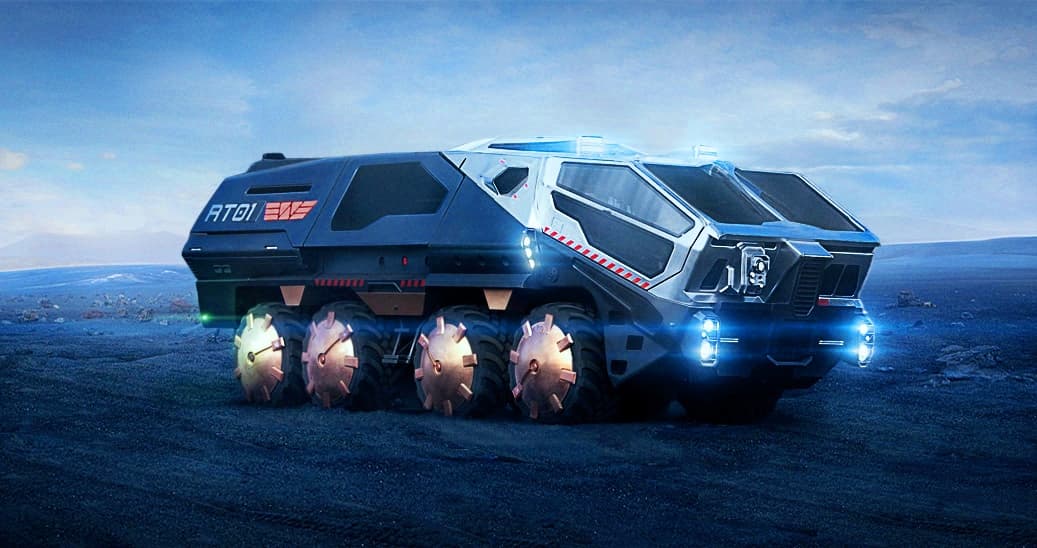
RT01 Transport Vehicle
Non-Pneumatic Tires
The Army has been using airless tires for a long time. It’s good that these tires are now available to the general public. The tires do not go flat, so they do not have to be replaced all that often. This means the U.S. Army can save a lot of money. It is said that heavy equipment with airless tires can carry more weight and take part in more rugged activities.
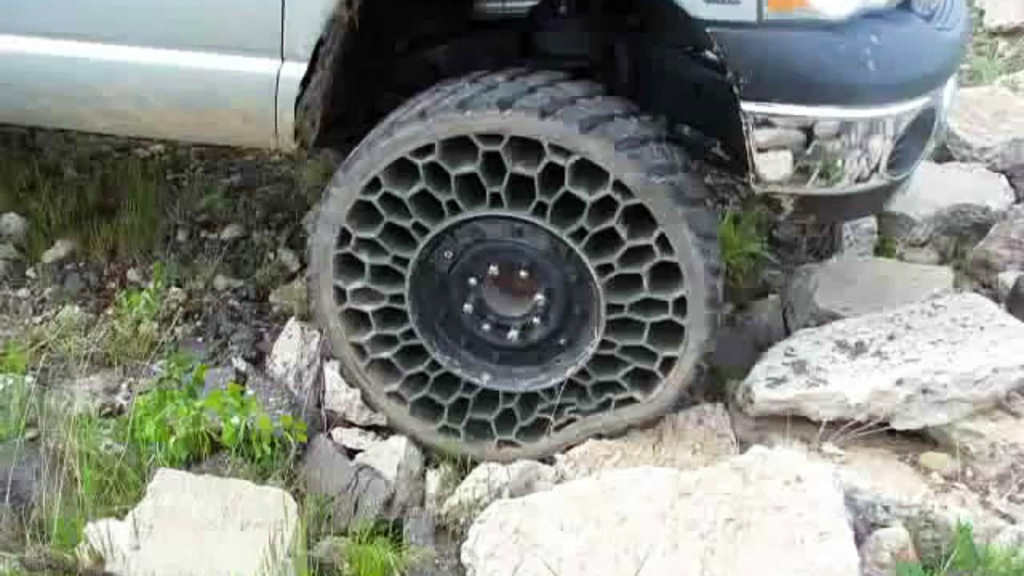
Non-Pneumatic Tires
Oshkosh M-ATV
The small yet supercharged patrol car Oshkosh M-ATV replaced the HUMVEE, and it has combat capabilities. Compared to the ones who came before it, the Oshkosh M-ATV is faster and more maneuverable. Also, it offers better protection from IEDs and rockets compared to many armored personnel carriers. Aside from that, it is equipped with Warlock electronic IED jammers and a CROW remote weapon station. Production of the vehicle started in 2009.
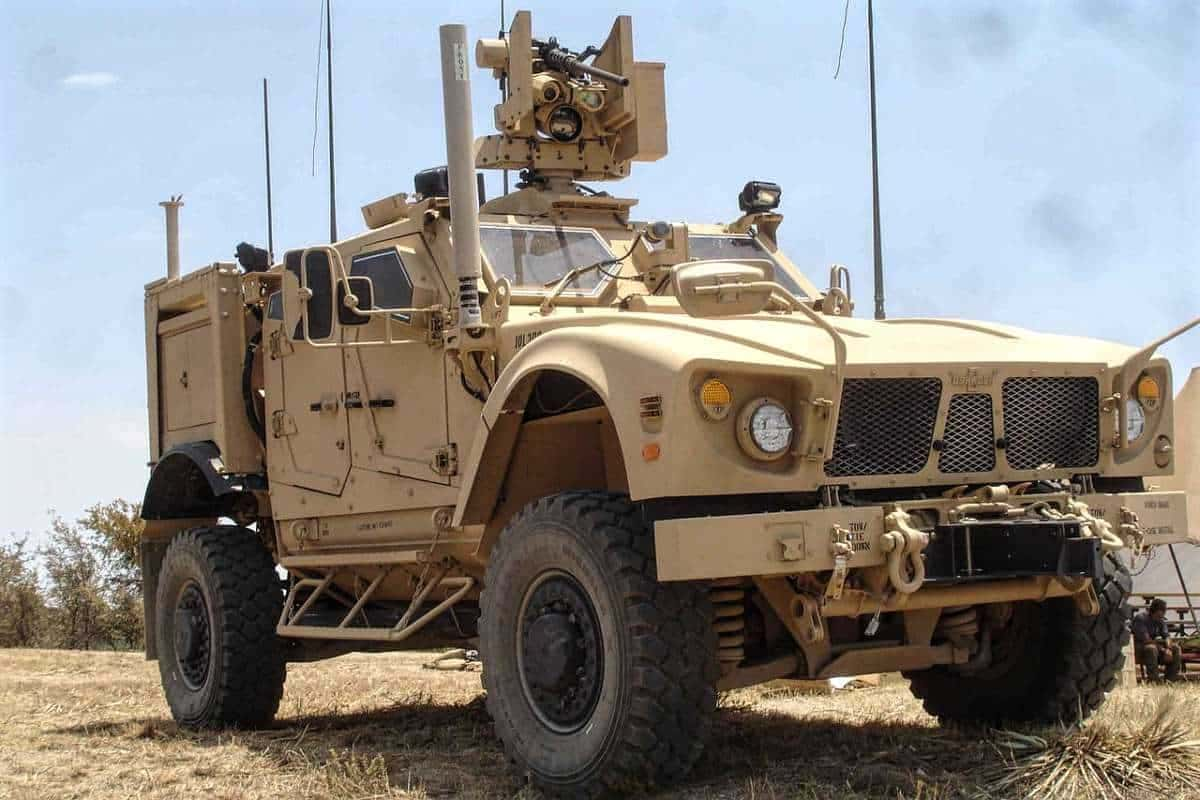
Oshkosh M-ATV
DOK-ING MV-4 Mine Clearance Drone
This Croatian-made drone can create safe passages through minefields and dig up barricades in only a few minutes while the crew is a couple of miles away. What makes this drone unique is that it has an all-electric power train which is very quiet. The DOKO-ING line provided specialized variants in the past, and they performed a variety of functions. The vehicle is designed particularly for humanitarian missions involving de-mining.
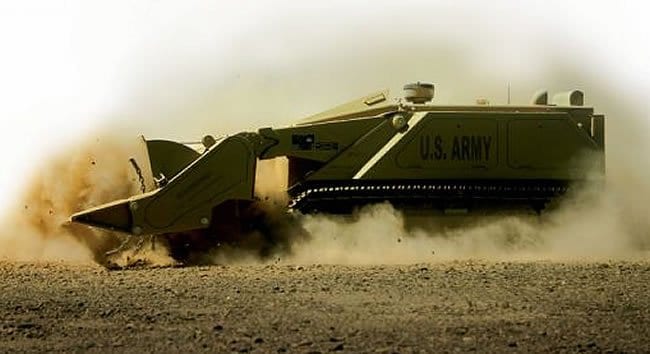
DOK-ING MV-4 Mine Clearance Drone
Gibbs Quadski
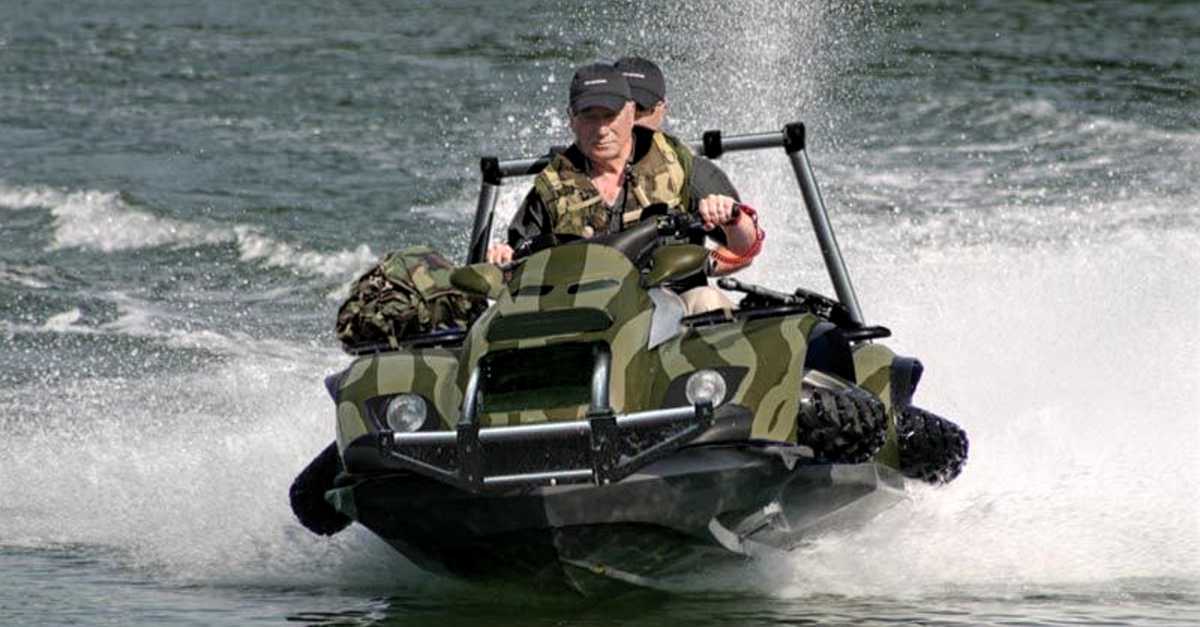
The first-ever amphibious assault bike the world has seen, the Gibbs Quadski has a 140-hp engine that can reach 45 mph on land and water. A few variants are available on the market now, and it includes an amphibious snowmobile. Originally, it was intended to be a sports craft for recreational purposes, but the supped-up quad bike is becoming popular among Special Forces operators. It was launched in October 2012.
Gibbs Quadski
XM25 Counter Defilade Target Engagement (CDTE) System
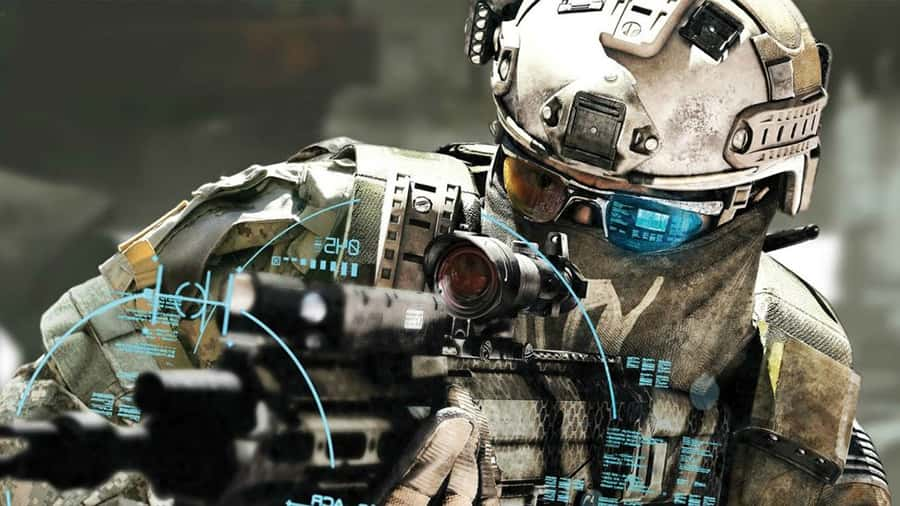
The XM25 CTDE System has truly changed the game. An airburst grenade launcher, it can fire grenades at incredible speed with amazing accuracy. It uses its laser rangefinder to spot enemy targets even if they are well-hidden. In April 2005, the prototypes were delivered for the U.S. Army to test. The preliminary deployment to Afghanistan happened five years later, in November 2010, and the first contact occurred in December of the same year.
XM25 Counter Defilade Target Engagement (CDTE) System
The Wheel Track
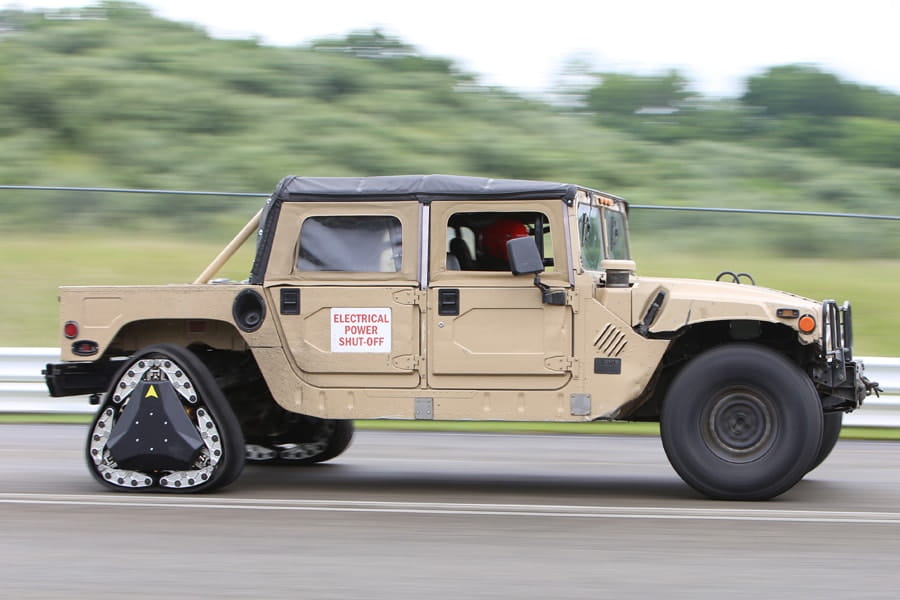
It may be hard to believe, but it only takes two seconds for the Wheel Track to transform. What’s more, it can do this while in motion! Carnegie Mellon University’s National Robotics Engineering Center developed the wheel, turning from circular to triangular. The Defense Advanced Research Projects Agency funded this project, which won the “Best of What’s New” Award at Popular Science in 2018. This has brought many changes to the field.
The Wheel Track
Corner Shot
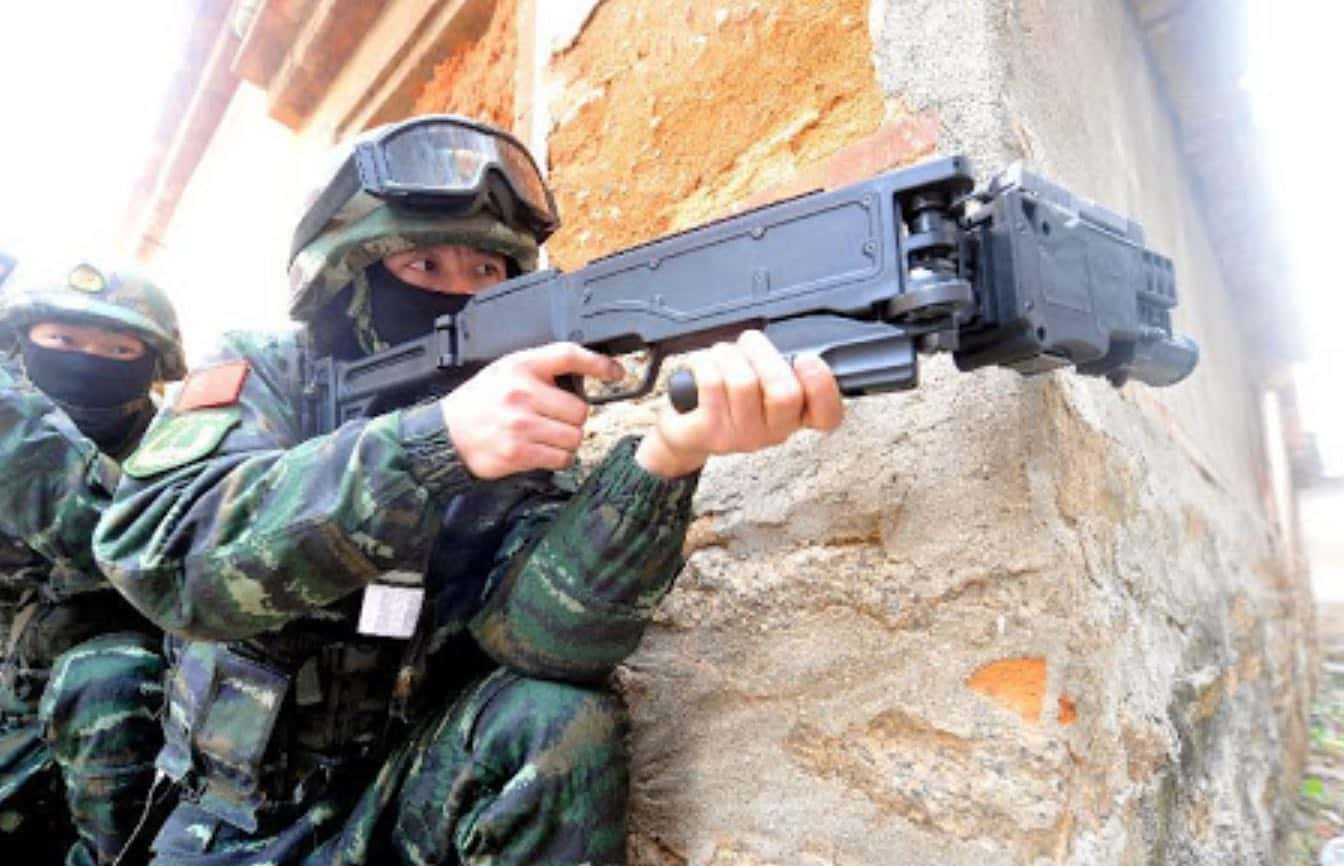
This idea had probably occurred to you if playing cops and robbers was something you did when you were younger. Soldiers around the world use this tactic. Urban combat involves brutal, short-range fighting. The Corner Shot firearm accessory enables combatants to shoot around corners and not expose themselves to enemy fire. The accessory is designed to give ground troops an advantage against adversaries in a dug defensive position.
Corner Shot
Crusher UGCV
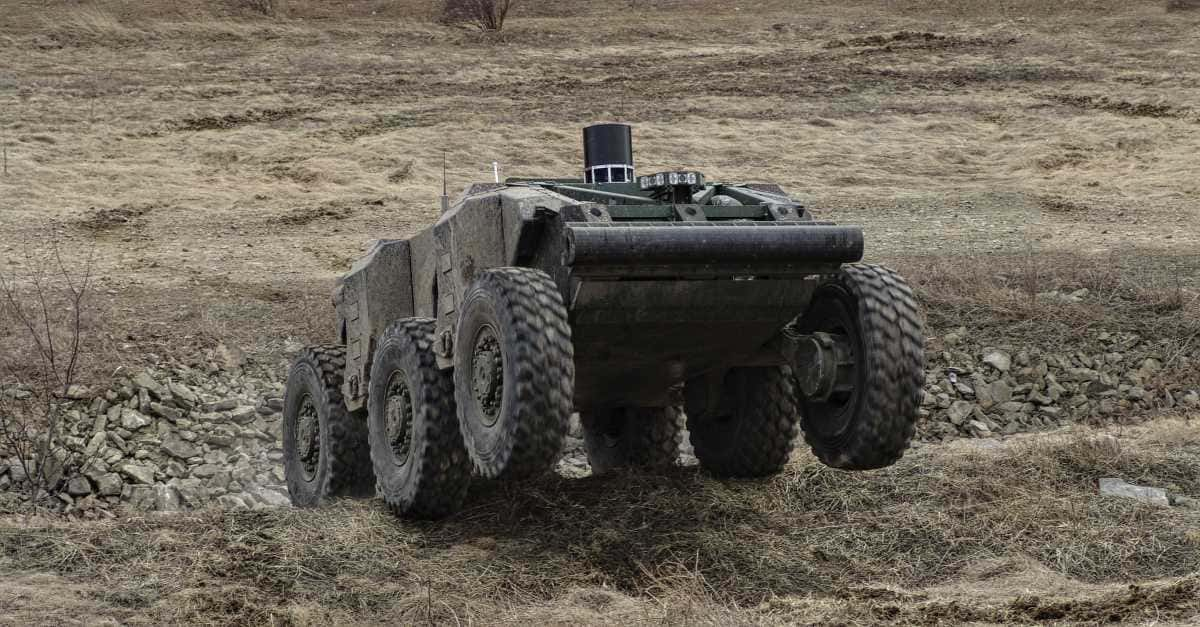
The Crusher is one of the most advanced in history when it comes to uncrewed ground combat vehicles. Its body is made of high-strength aluminum and titanium, and it has a hybrid electric and turbo-diesel engine. It also has a totally independent suspension, and it is capable of taking on pretty much any combat or support role which comes to mind. With a hi-tech sensor and an AI suite, it can fight or deliver supplies regardless of the weather.
Crusher UGCV
Urban Aeronautics AirMule
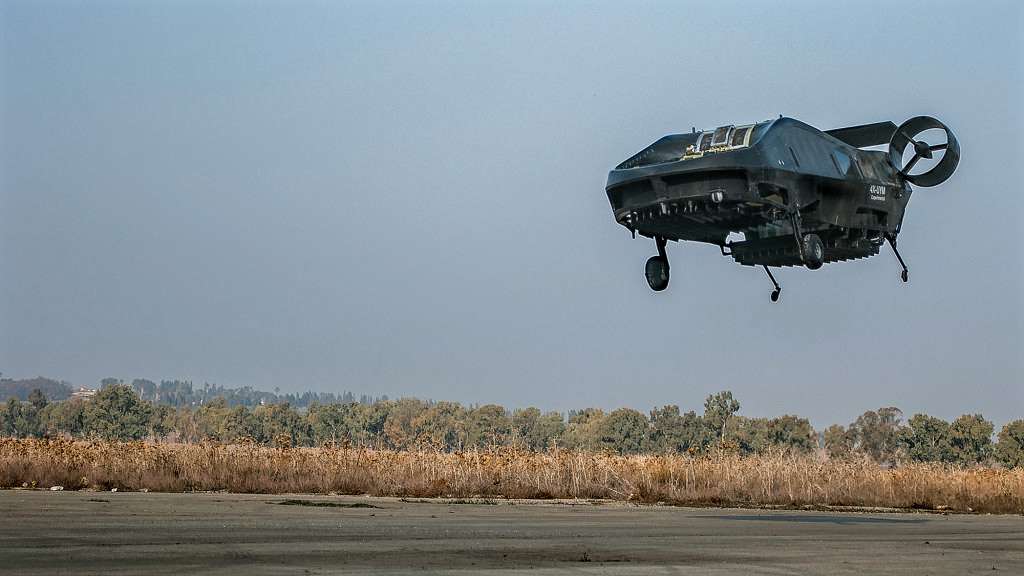
The Israeli Defense Forces created this flying car. A real game-changer in terms of urban operations, the AirMule can carry over 1,000 pounds of people or equipment for an hour. Aside from that, it can fit in tight spaces that helicopters can’t reach, making it particularly handy to send supplies to isolated areas or rescuing survivors from burning buildings. The AirMule is also unmanned, but it is still in the development stage.
Urban Aeronautics AirMule
FLYPmode Patrol Vehicle
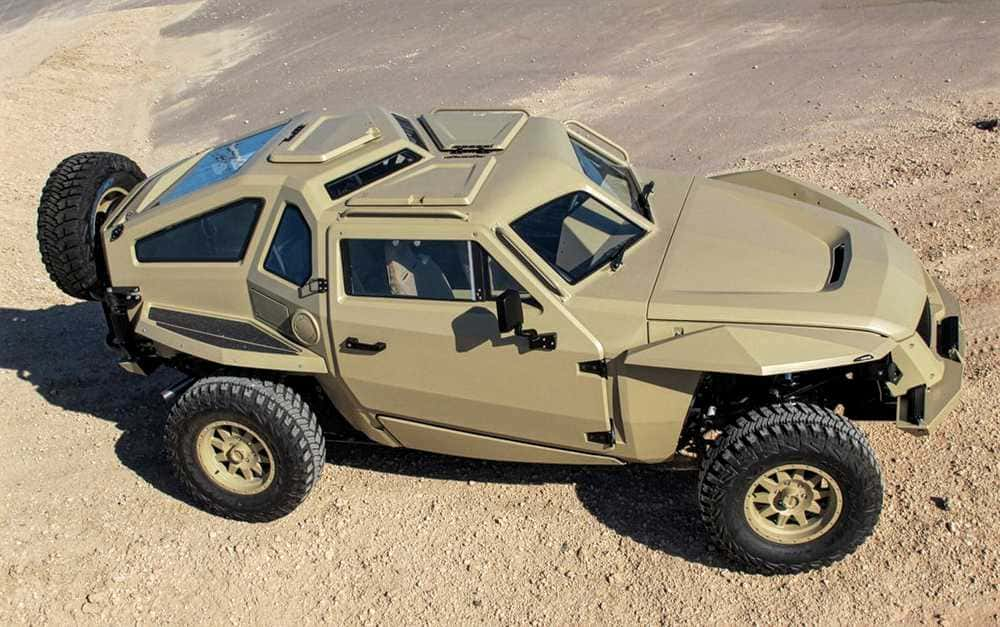
While it’s true that operational testing is currently being done on the FLYPmode, the patrol vehicle promises to improve capabilities when it comes to the rapid deployment of forces. It offers nearly the same protection which a light MRAP provides, but it has superior speed, better visibility, and improved maneuverability. The DARPA creation is developing quickly. It is cheap, modular, and adaptable, so it will likely enter service in two years.
FLYPmode Patrol Vehicle
Fed Alpha Military Vehicle
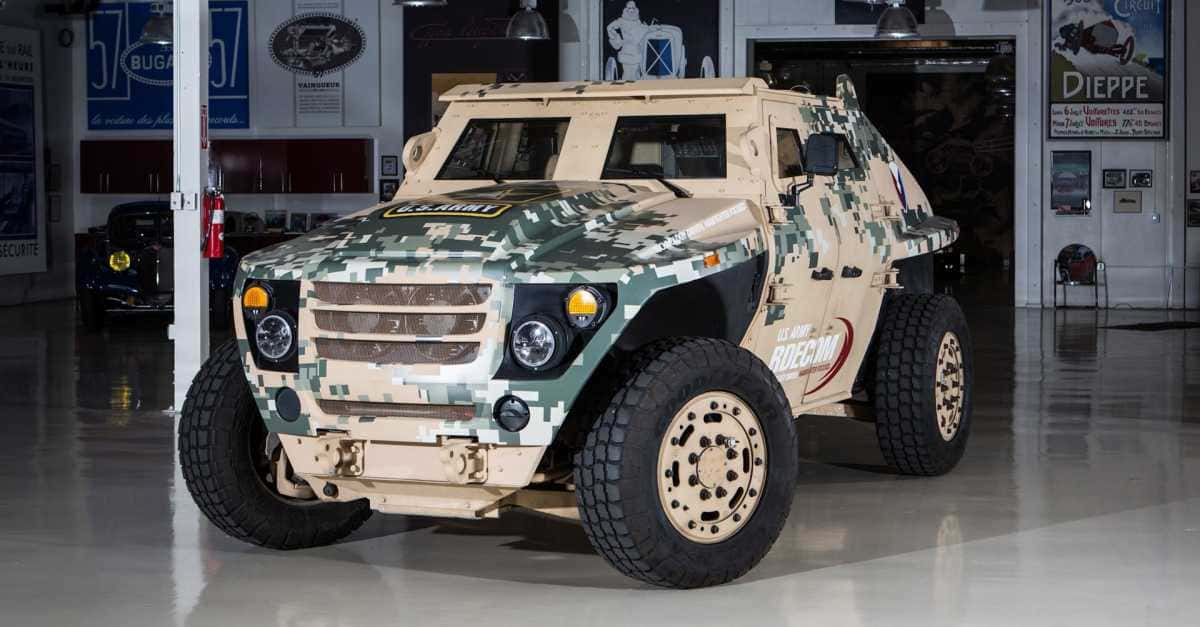
When the time came for the HUVEE to be replaced, an early contender that was considered was the Fed Alpha program. However, these days, it is kept alive to serve as a technology demonstrator for future combat designs. With its hybrid engine, this armored vehicle is among the most fuel-efficient in the world. It burns only 70 percent of what an armored Humvee does, but it offers the same speed, cargo capacity, and armor protection. It also has a built-in solar panel that can be used for recharging.
Fed Alpha Military Vehicle
Chenowth Advanced Light Strike Vehicle
Operation Desert Storm made the Light Strike Vehicle famous. Its latest version is called the Chenowth Advanced, which is faster, more fuel-efficient, and more mobile than before. Aside from that, the Chenowth Advanced can navigate 75 percent gradients and 50 percent side slopes at high speeds. Not only that, this little scout’s 160-hp diesel engine is capable of having strap-on armor! The speedy vehicle also has Warlock electronic jammers, battery hookups, and advanced surveillance sensors.
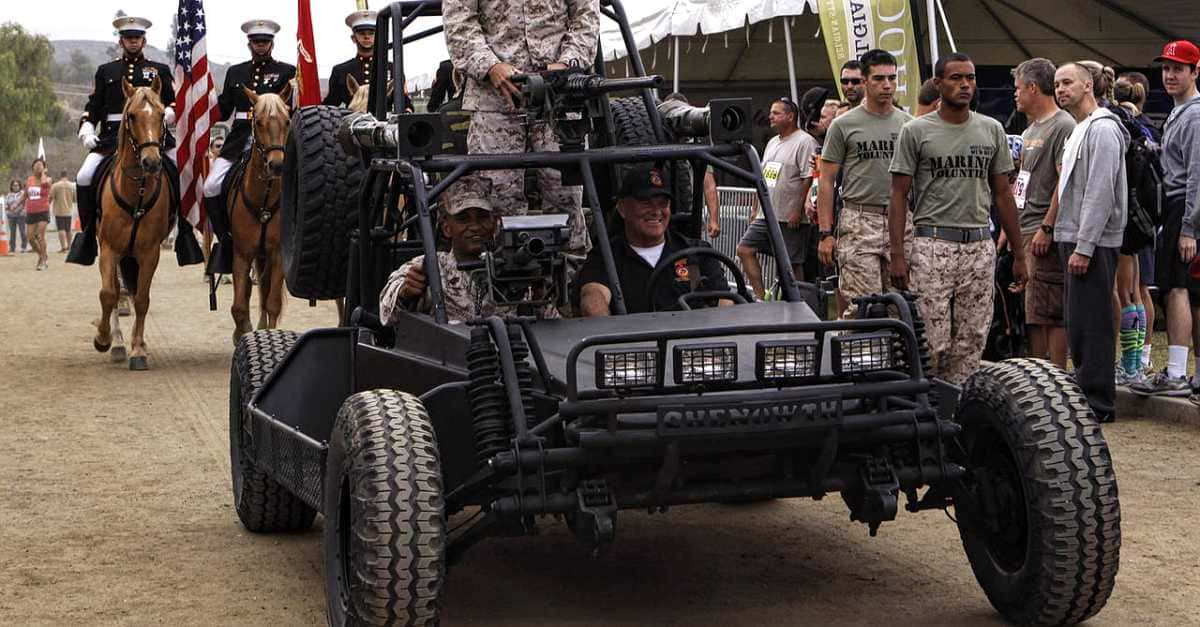
Chenowth Advanced Light Strike Vehicle
Krasukha-2/4 Electronic Warfare System
What you are looking at is a powerful mobile electronic jammer or countermeasure. A Krasukha-2 has the capability to jam UAV controls and AWACS radars, incoming cruise missile guidance systems, and fire control sensors. It has a 250-km range, which is pretty impressive. The mobile system is potent, and it is even blinding reconnaissance low-earth-orbit satellites and causing permanent damage to radio-electronic devices that are its targets. Whoa.
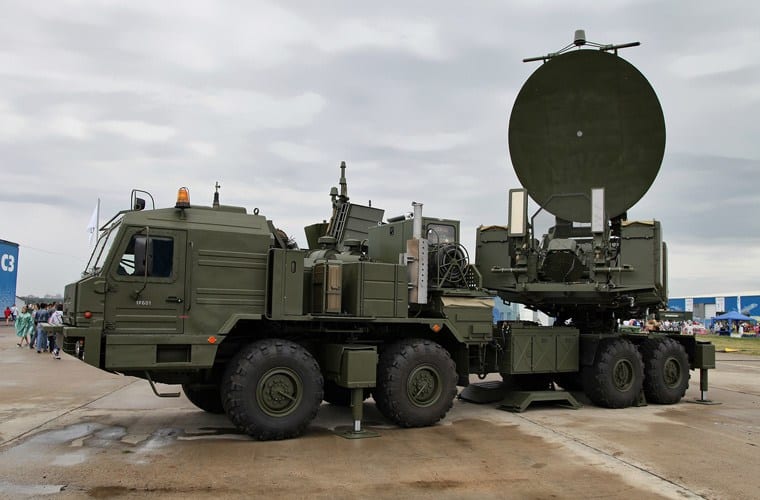
Krasukha-2/4 Electronic Warfare System
Storm Search And Rescue Tactical Vehicle
What’s great about these dune buggies is that they let rescue teams barrel through tough terrains and carry three litters of critical patients. This vehicle is compact and lightweight enough to be air-dropped from large transport helicopters. It can also make high-speed J-turns on rocky ground or U-turns on steep hills. The cross-country maneuverability of the Storm Search and Rescue Tactical Vehicle remains unmatched by other military vehicles.
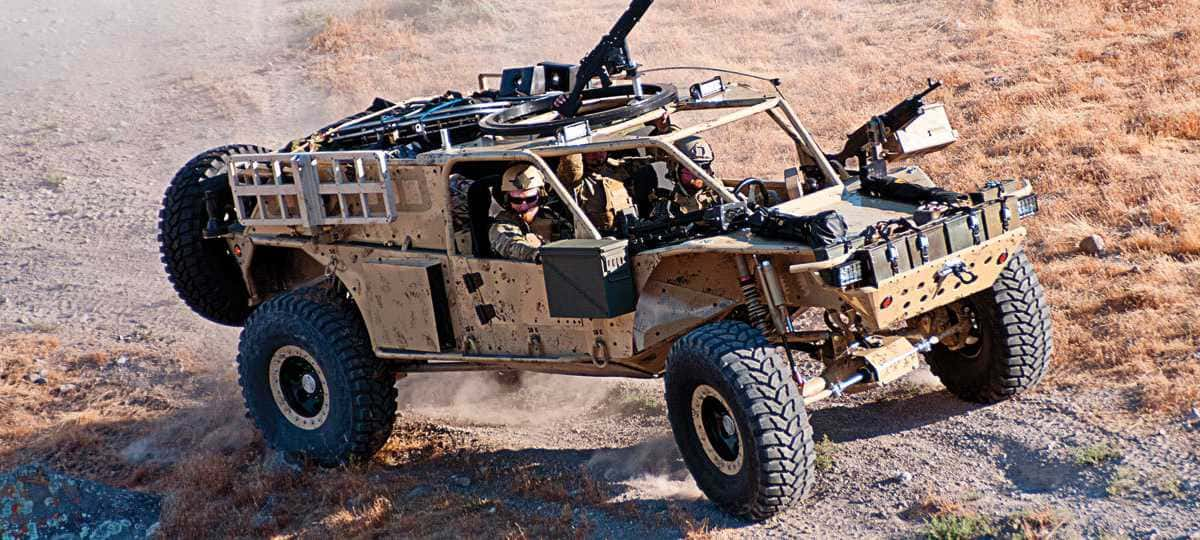
Storm Search And Rescue Tactical Vehicle
TOS-1 Buratino Heavy Flamethrower System
Admittedly, the TOS-1 is among the worst military vehicles in terms of maneuverability. Nevertheless, it can’t be denied that it is among the best for how it looks. While it has a standard T-72 MBT chassis made in Russia, the turret has been switched with Hollywood-like rocket contraptions, hoping to convert it into an artillery machine. The TOS has the capability to ripple off anything from 24 to 32 incendiary or thermobaric rockets in seconds.
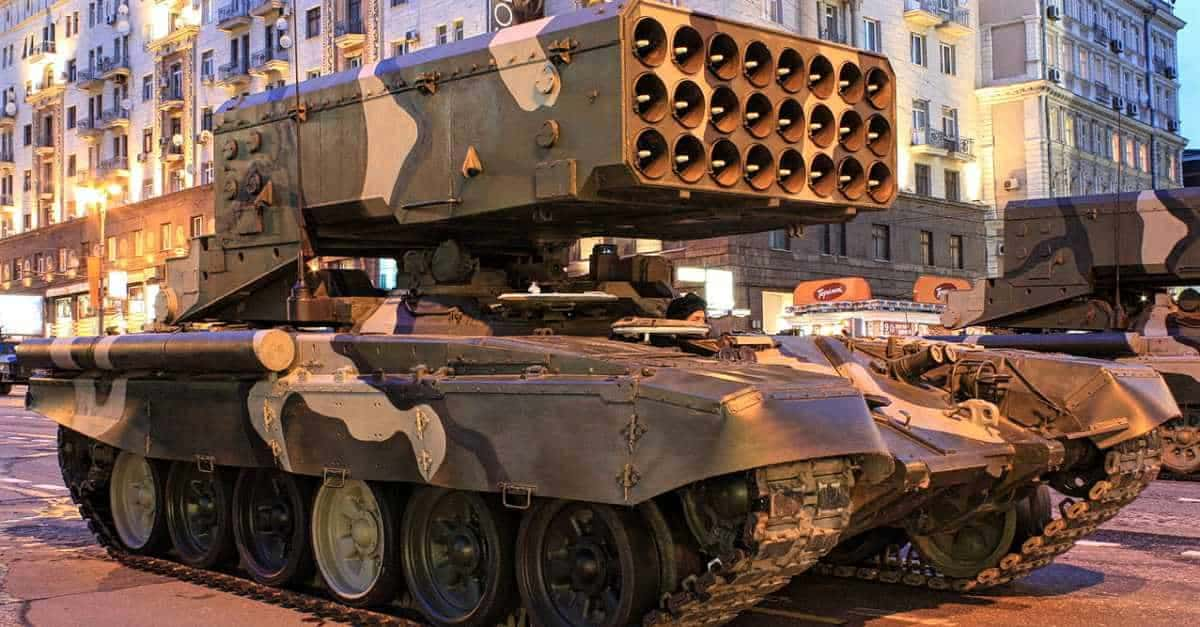
TOS-1 Buratino Heavy Flamethrower System
Ultra Heavy-Lift Amphibious Connector
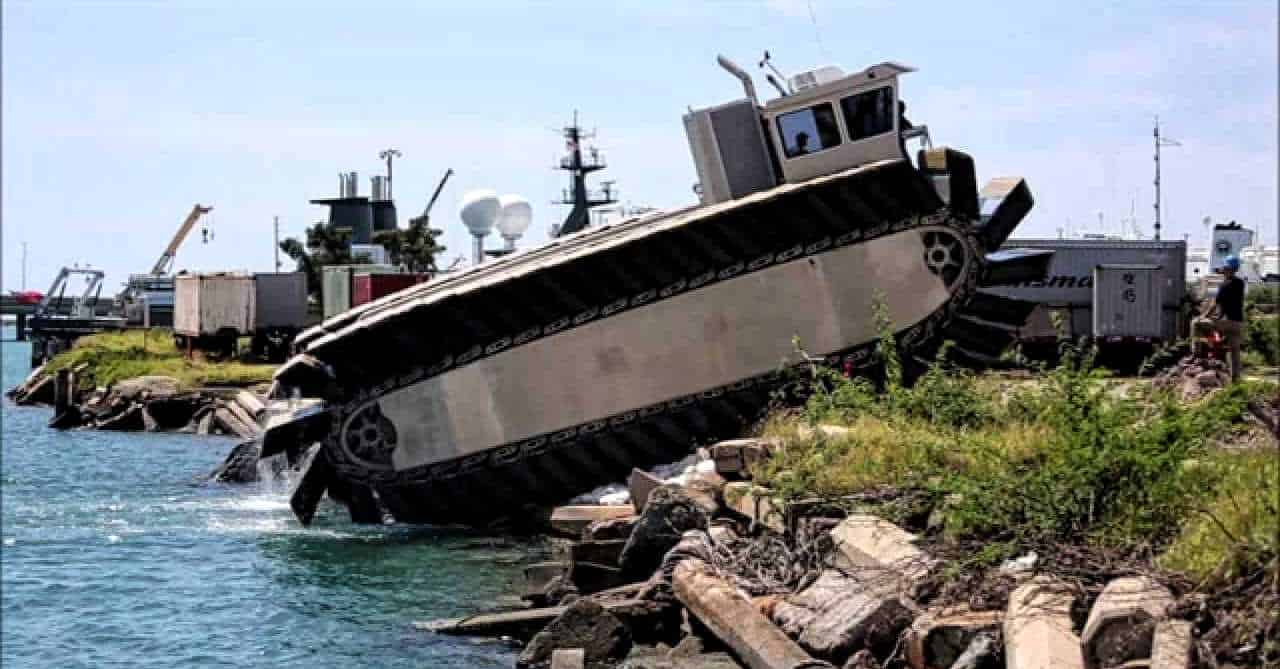
What you are looking at is the half-scale model of the Marine Corps’ newest tracked amphibious landing craft called the Ultra Heavy-Lift Amphibious Connector. Dubbed the “combat paddleboat,” it has three times the cargo capacity and two times the range of the largest hovercraft. This means that a UHAC can haul a pair of M1 Abrams tanks into the “hot landing zones” at once. On top of that, even if you add a ton of armor to the two hulking tanks, the UHAC can still haul both tanks. Whoa.
Ultra Heavy-Lift Amphibious Connector
Merkava IV Windbreaker MBT
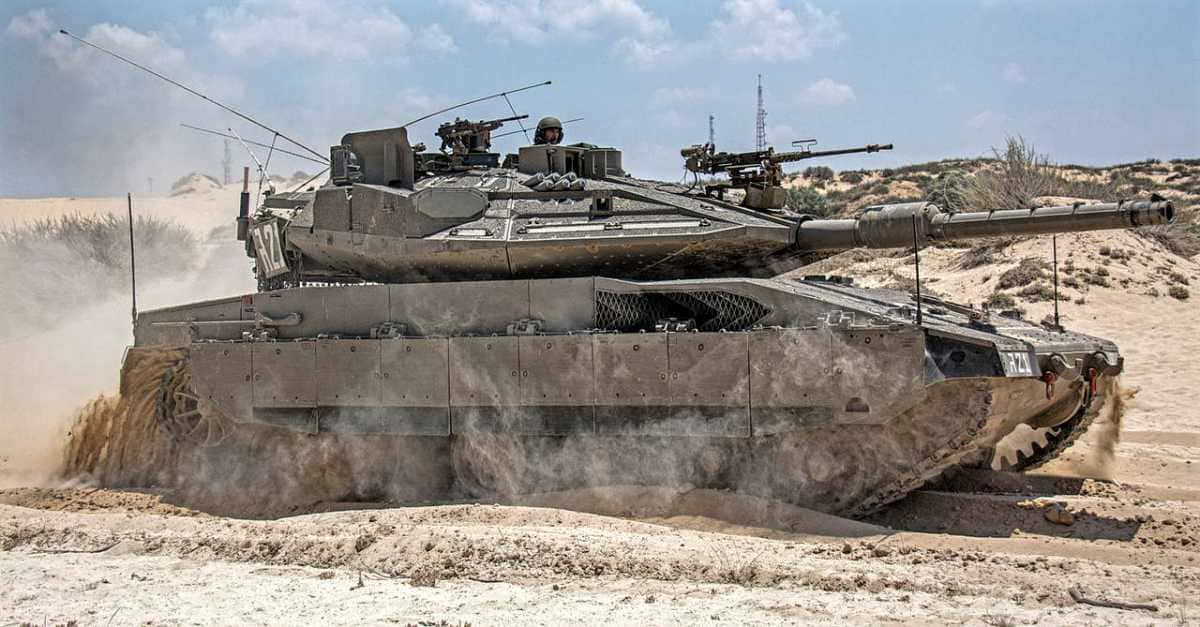
This armored vehicle is a real game-changer, and it is better than many tankers out there. In addition to its 120 mm cannon and multiple remote-controlled machine guns, the Merkava IV Windbreaker MBT is also equipped with a 60 mm mortar. The tank also has a cargo bay that could carry an infantry fire team of four. Aside from that, it comes with a Trophy active protection system that will handle incoming missiles using its massive radar-controlled shotgun.
Merkava IV Windbreaker MBT
Saab Skelder
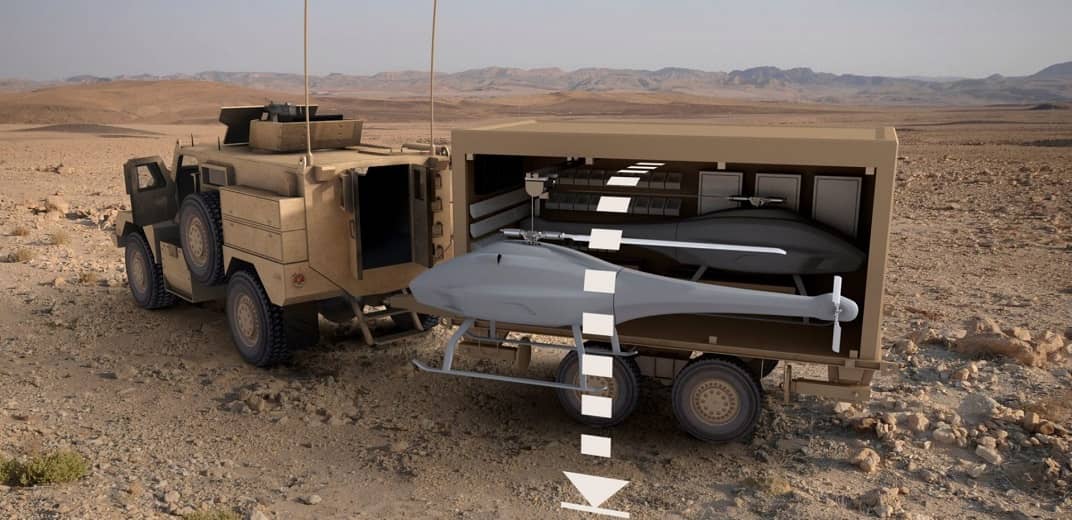
This is another unit that the Swedish company made. This Vertical Take-Off and Landing vehicle can gather, surveillance, electronic warfare, and light cargo transportation. It can also be equipped with range finders, laser pointers, 3D mapping, SIGINT (Signals Intelligence), and a light cargo hook. The Skeldar V-200, in particular, can land and take-off on an area that is 15×15 meters. The Saab Skeldar Debuted at the Paris Eurosatory exhibition in 2006.
Saab Skelder
The Light Marine Air Defense Integrated System
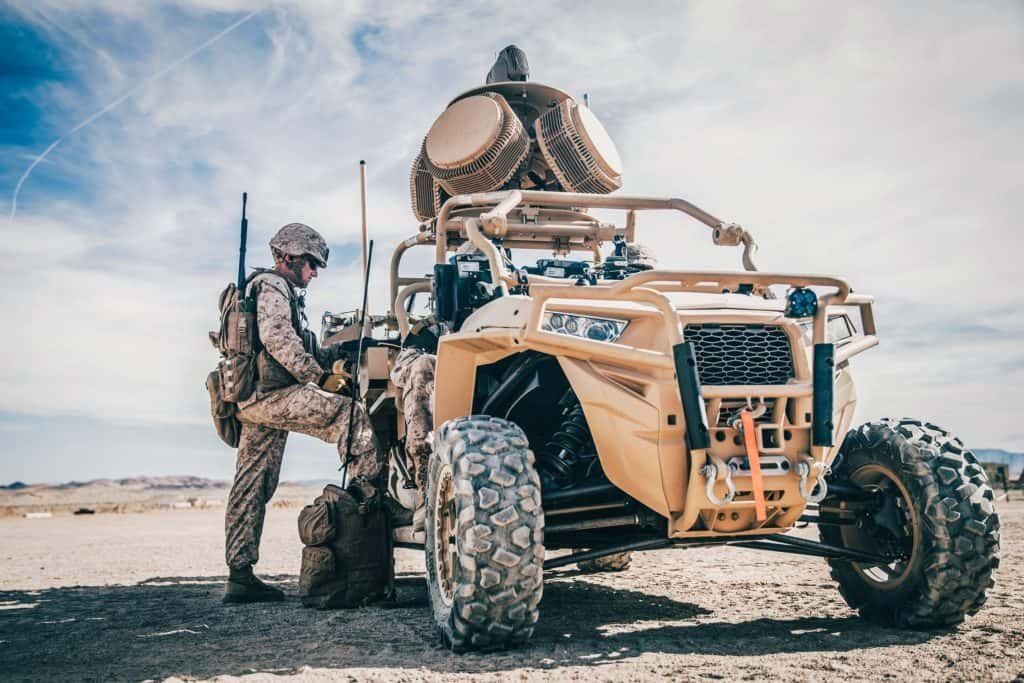
You might be surprised to know that this energy weapon does not blast artillery or lasers. Instead, it blasts radio signals! The Light Marine Air Defense Integrated System, or LMADIS, comprises two all-terrain vehicles, the Polaris MRZRs. One acts as the command unit, while the other comes with sensors and signal jammers. It seems it is not very different from commercially available drone zappers, but it is more high-powered.
The Light Marine Air Defense Integrated System
Black Knight UGCV
This semi-autonomous infantry fighting vehicle may still be in the prototype stage, but it looks quite promising. It is expected to revolutionize ground combat. With several remote-operated machine gun attachments and a 30 mm autocannon, the Black Knight UGCV is one of the most powerful and biggest combat drones out there. One of its functions will be assisting infantry forces by serving as an expandable wingman. The US Army is currently testing and evaluating the vehicle.
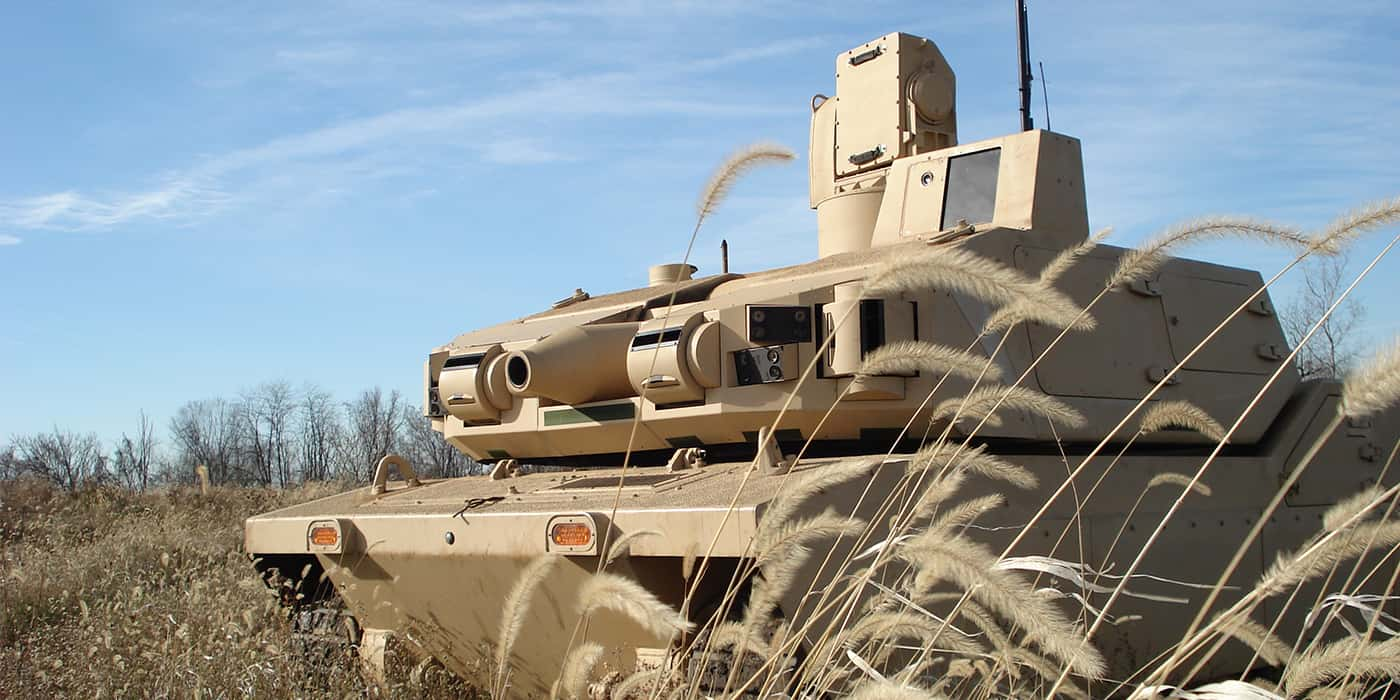
Black Knight UGCV
The Mega M1 Riot Control Vehicle
This fully automatic, fully-loaded, and fully electronic beast weighs over 17,500 pounds and helps control riots or small combat zones. With the scenario in mind, every detail was added to the Mega M1 Riot Control Vehicle. It has lights, complete climate control, reinforcement cargo space, weaponry, water hose, and even its own CCTV system. If you ask us, it seems as if they put so much thought into this specific vehicle.
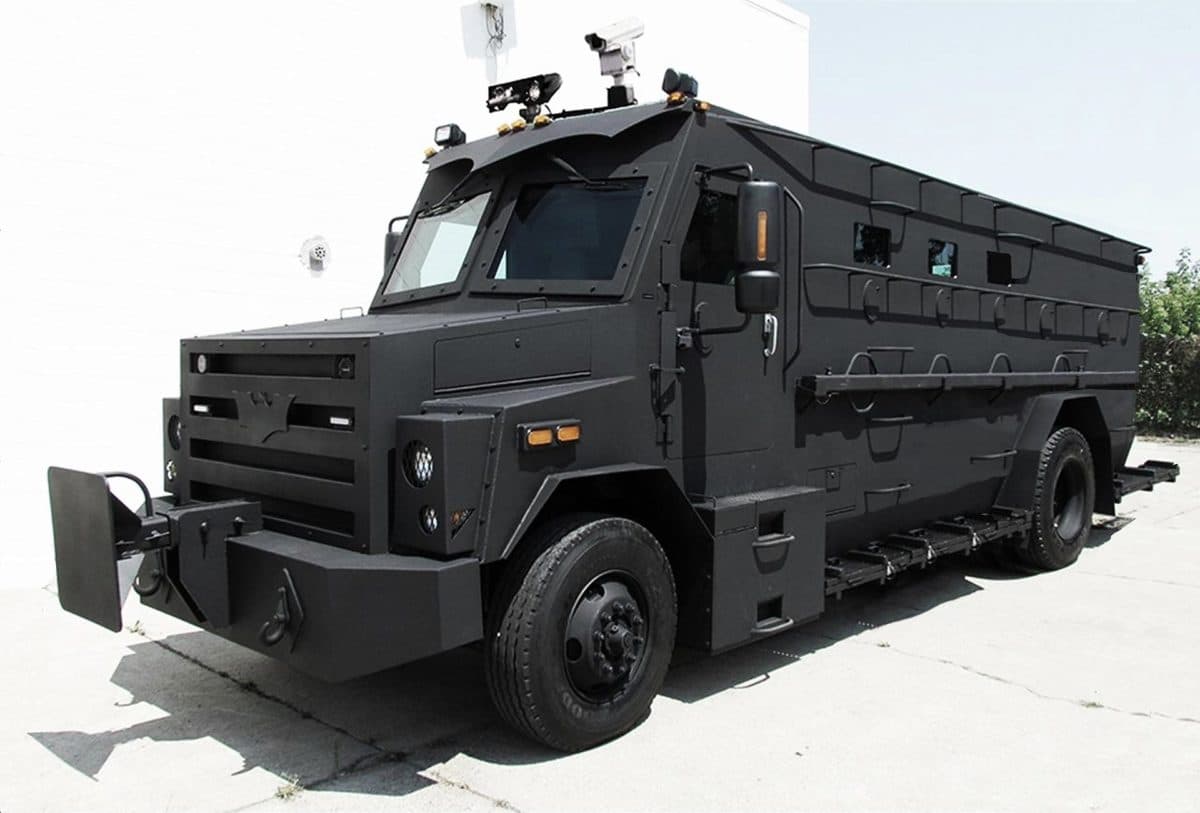
The Mega M1 Riot Control Vehicle
Aggressive Hydraulics
There are a lot of things that you can solve by applying hydraulic solutions. For instance, it can be used in road creation, aircraft cargo solutions, combat zone reinforcement, and more! Aside from the fact that it looks cool, it is also an efficient way to solve different problems. Advancements in machining and alloys and a better understanding of engineering and mechanics have led to advancements in hydraulics.
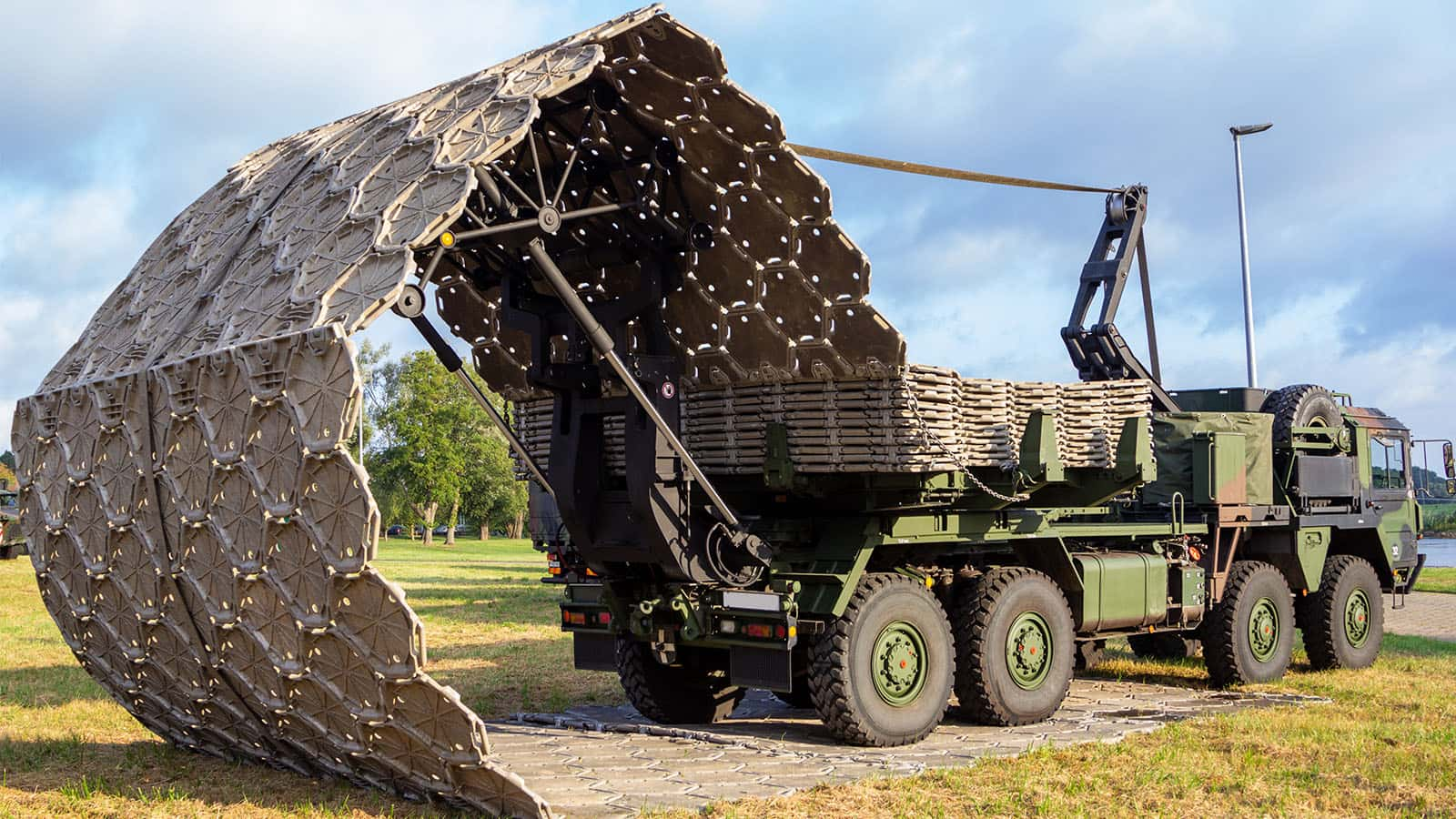
Aggressive Hydraulics
The SandCat
This vehicle has the visibility and maneuverability of traditional patrol military cars and boasts STANAG Level 3 armor. It is also an all-terrain vehicle that can cross streams, steep areas, and trenches. It can even deal with side slopes at 25 degrees or a 60-degree incline. Aside from that, it can cruise across mud, sand, rocks, and ice. With a 40-feet turning radius, the Sandcat has an awe-inspiring performance on and off the road.
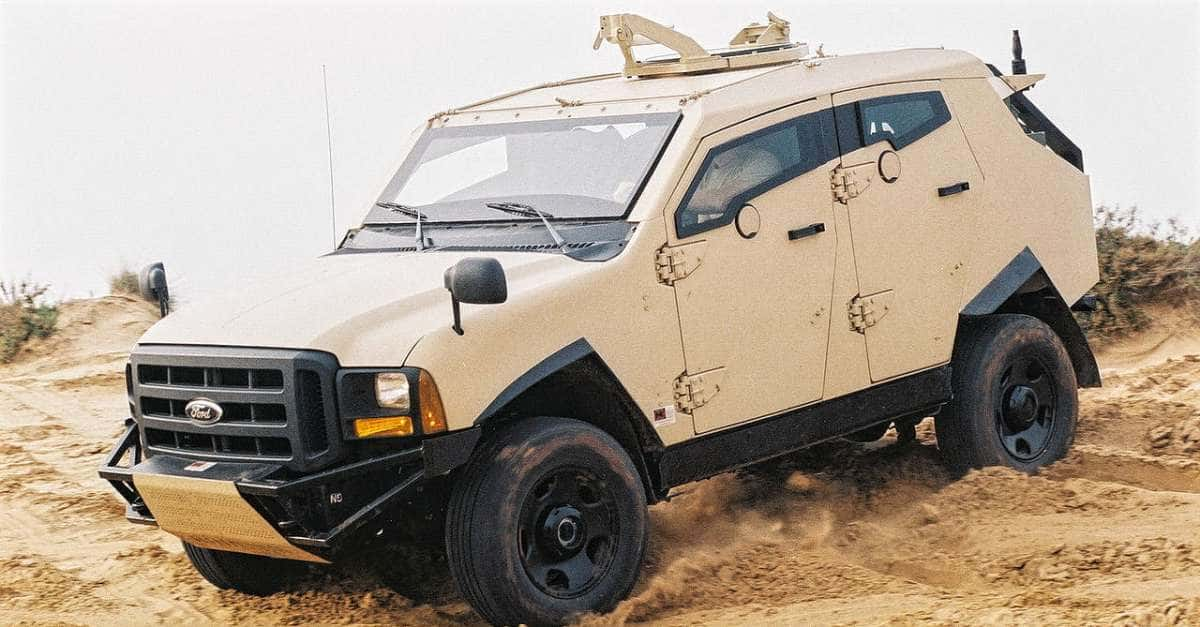
The SandCat
Russian Falkatus Vehicle
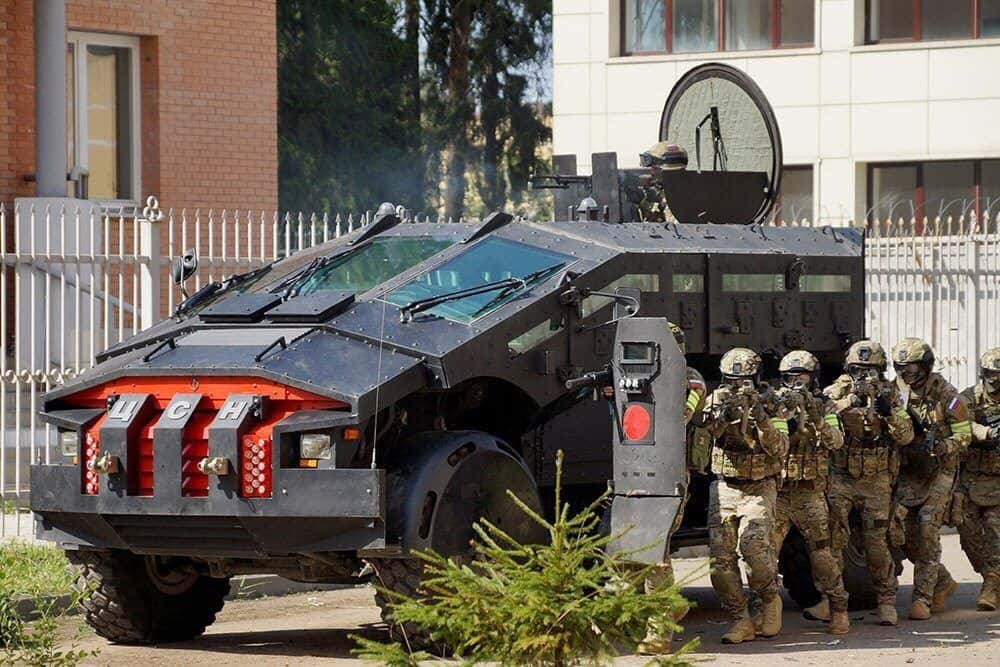
In this photo is the Russian-made armored vehicle dubbed the Falkatus. This model is a top-model creation that was only revealed recently! It used to be called the “Punisher” and is said to have a double-axle chassis similar to that of the KAMAZ’s rally race iteration. It is also said that it is designed to protect the staff from machine-gun fire. There is very little known about the Falkatus, and these claims have not been verified yet.
Russian Falkatus Vehicle
The Armored Combat Engineer Robot
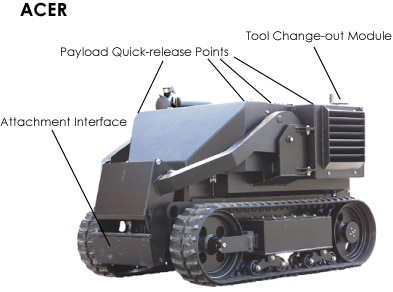
This land drone weighs 2.25 tons and is one of the biggest in service today. The Armored Combat Engineer Robot is also highly adaptable. It may be heavy and slow, but this drone can perform different dangerous missions without putting lives at risk. This makes it ideal in terms of search and rescue in dangerous locations. In addition, these machines function as launch platforms for smaller aerial surveillance drones.
The Armored Combat Engineer Robot
Convair XC-99
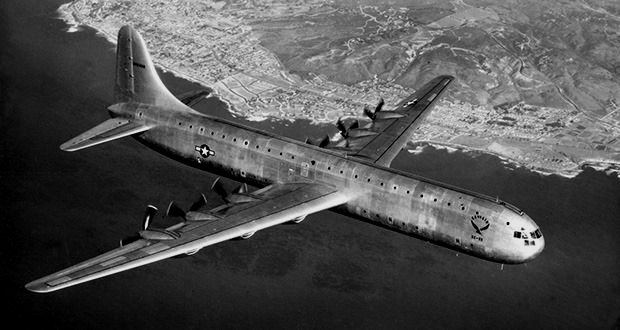
It is quite interesting to note that one of the largest planes in the world is also among the oldest. With its double cargo decks, this aircraft was designed to carry 400 fully equipped soldiers or 100,000 pounds of cargo. It took to the air in 1947 but was retired in 1957. The United States Air Force used the Convair XC-99 as a heavy cargo plane. It was the largest piston-engined and land-based transport plane of all time.
Convair XC-99
Antonov An-124
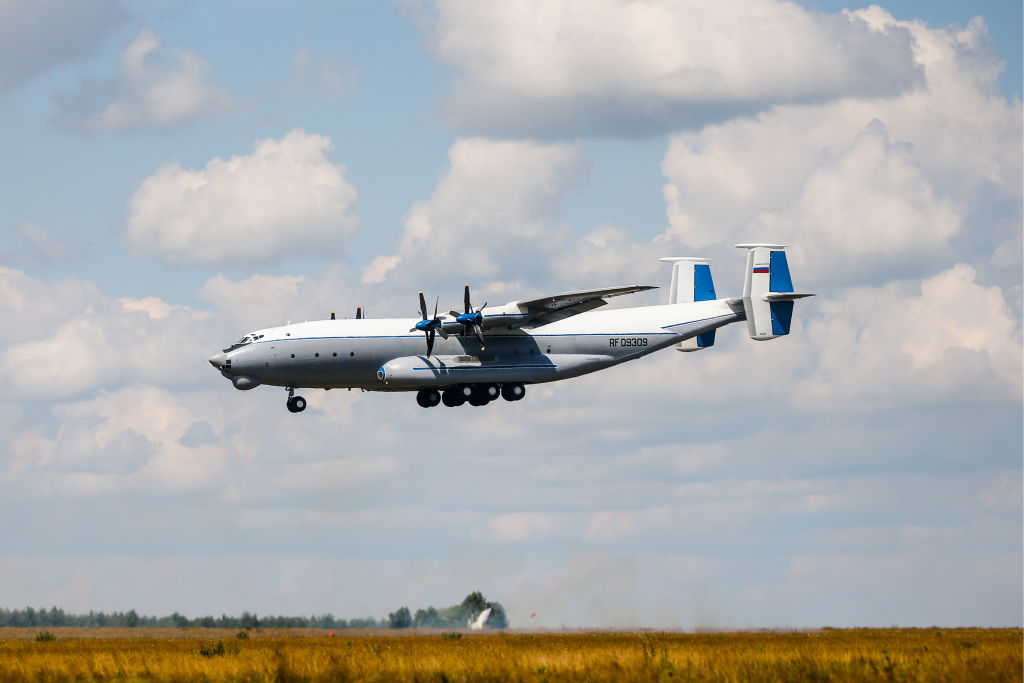
The Antonov Design Bureau built this 226-foot aircraft in the 1980s. Since then, the plane has been used in both military and commercial aviation. There were more than 50 of them, and they were used around the globe. The strategic airlift quad-jet Antonov An-124 was the heaviest cargo plane in the world for three decades. The Antonov AN-225 has surpassed it, but it is still among the world’s heaviest cargo aircraft.
Antonov An-124
HK-1
The HK-1 was called the “Spruce Goose” because it was almost completely made of birch. Originally, it was intended to be used during World War II as a transatlantic transport aircraft, though it was not completed in time. The U.S. military flew it once back in 1947, and just one prototype was built. The flight covered roughly one mile. It is displayed at Oregon’s Evergreen Aviation and Space Museum.
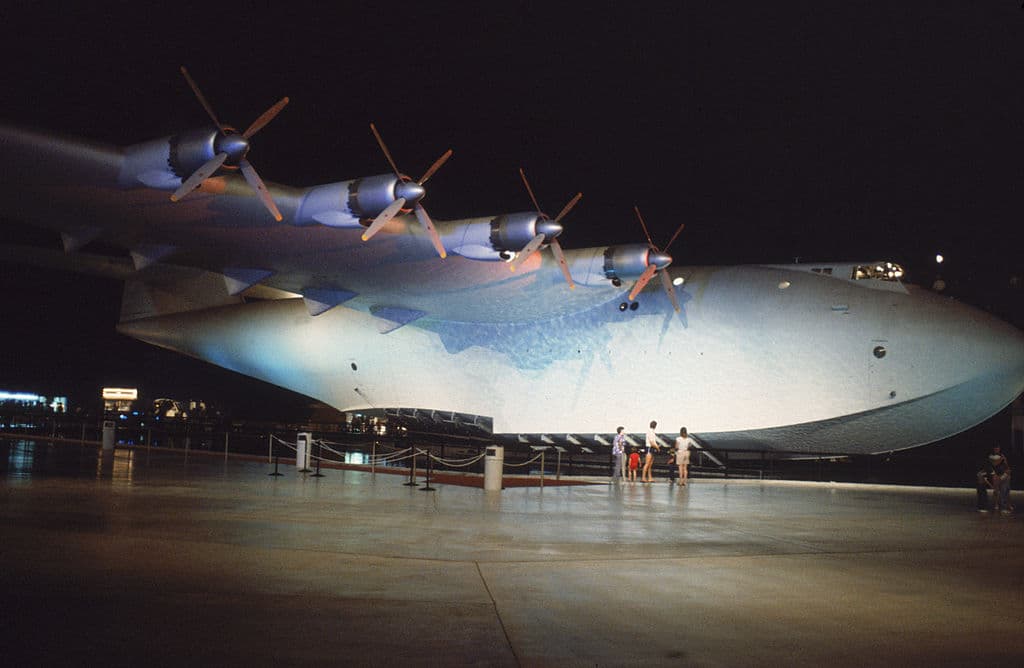
HK-1
Blohm And Voss BV 238
Built during World War II, this German flying boat first took to the air in 1944. The Blohm and Voss BV 238 weighed 120,769 pounds empty, and it was the heaviest aircraft ever built during that time. Because of the resources needed to construct it, there was only one unit ever built. In addition, the aircraft was the largest of all the planes that the Axis powers produced during the war.
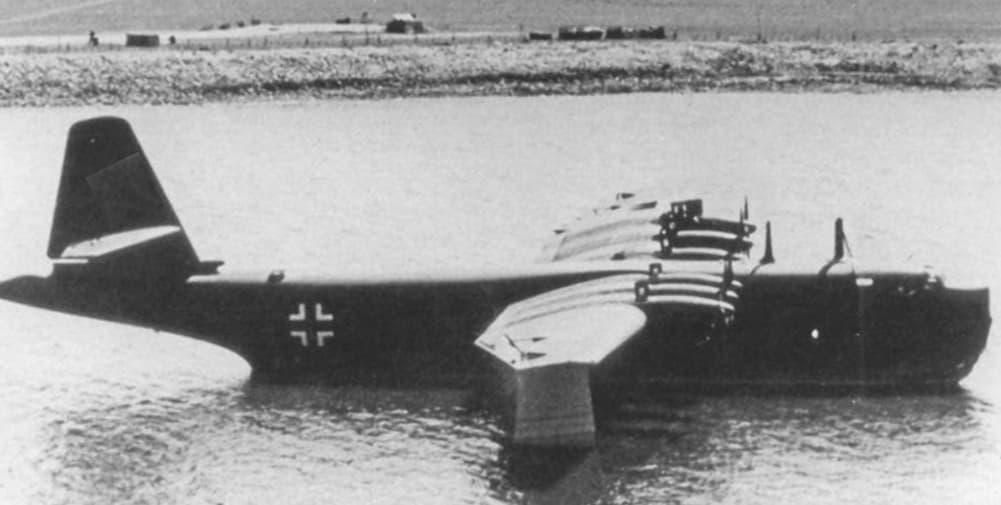
Blohm And Voss BV 238
Antonov AN-225 Mriya
The longest and heaviest plane ever built, a total of six turbofan engines powered the strategic airlift cargo plane. In the 1980s, the Antonov AN-225 Mriya was designed and manufactured to transport the Buran spaceplane of the Soviet Union. It has a maximum takeoff weight of 640 tons and has the longest wingspan of all aircraft that are currently in service all over the globe. Today, it is in commercial operation, carrying oversized payloads.
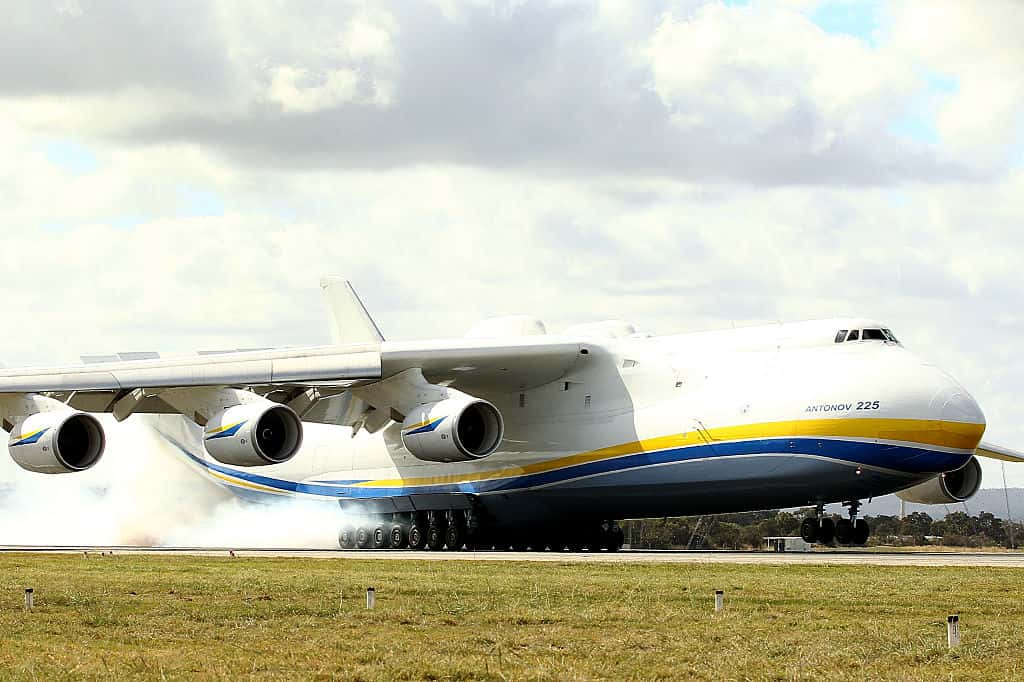
Antonov AN-225 Mriya
Ilyushin Il-76
This aircraft was built during the Cold War, and it is still in service to this day, with over 1,000 units around the world. Developed for the former Soviet Union, the four-engine turbofan airlifted was intended for commercial freight at first. However, the Russian military ended up using the aircraft. The Ilyushin Il-76 has the capability to transport some of the most powerful military equipment and vehicles in the world.
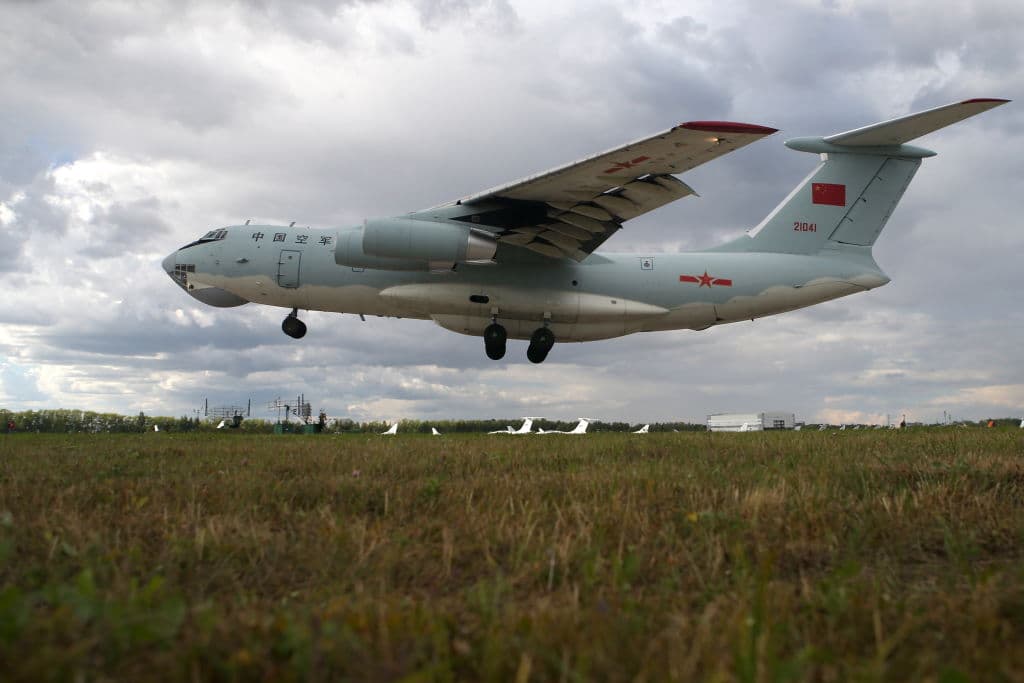
Ilyushin Il-76
Convair B-36 Peacemaker
The United States Air Force used the Convair B-36 Peacemaker between 1949 and 1959. Even though it had a short lifespan, it remains the largest aircraft with a piston engine that was ever mass-produced. At 230 feet, the wingspan of the B-36 was the longest of all combat aircraft built. It was unique in that it could transport nuclear weapons in America’s arsenals at the time with no need for any modifications. The B-36 was eventually replaced with the Boeing B-52 Stratofortress in the late 1950s.
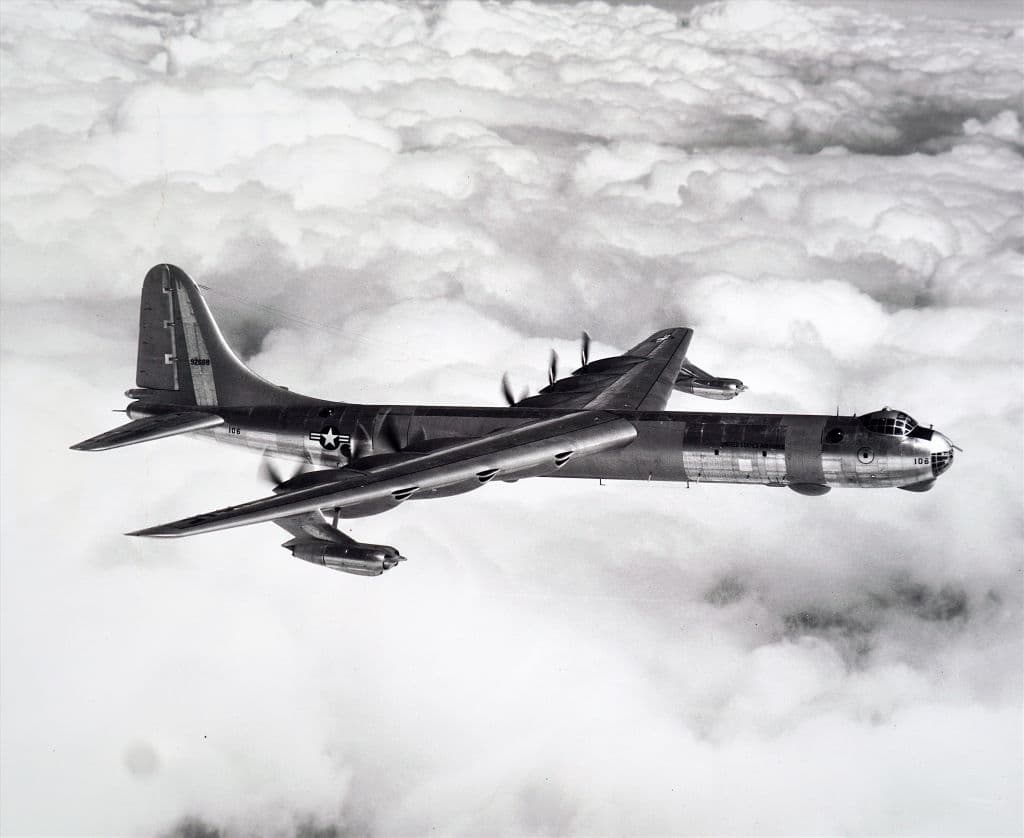
Convair B-36 Peacemaker
Boeing C-17 Globemaster III
This military plane is one of the largest ever built. The C-17 Globemaster III first took to the air in 1991, and production continued until 2015. McDonnell Douglas developed the aircraft for the United States Air Force and cost $218 million each unit. The Globemaster III carried out strategic and tactical airlift missions, which frequently included airdrops of heavy machinery or people, in addition to emergency medical evacuations. These things make the plane an absolute beast.
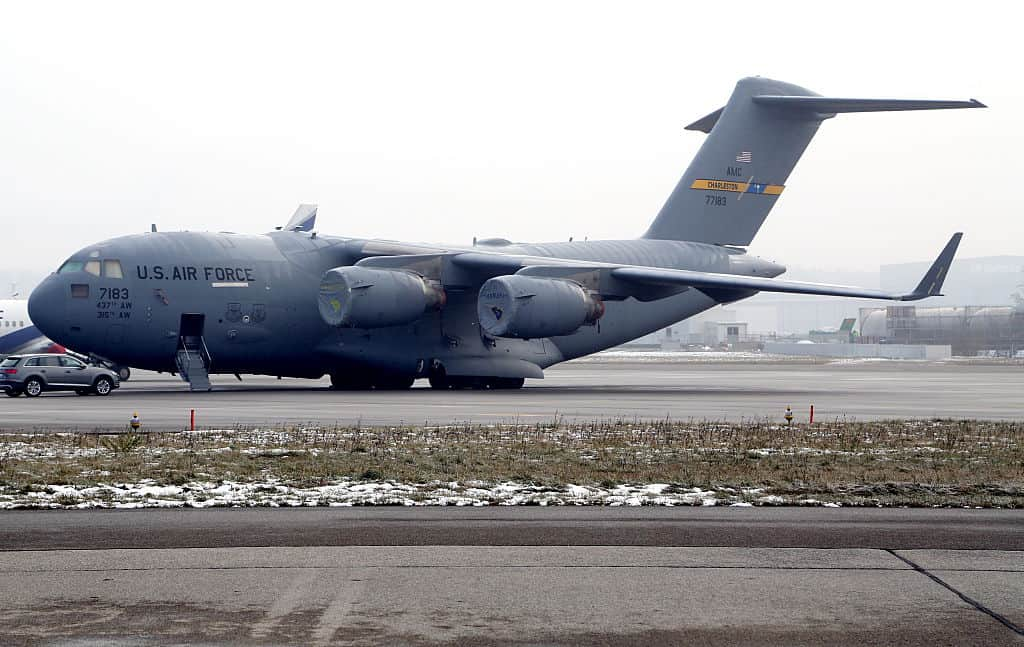
Boeing C-17 Globemaster III
Zeppelin-Staaken R.VI
Dating back to World War I, the Zeppelin-Staaken R.VI was among the largest wooden planes produced in the early 1900s. The four-engine strategic bomber was built in Germany. It was among the first military aircraft that had a closed cockpit. There were 18 copies of the aircraft produced though only six survived the war. The others were either destroyed in crashes, were shot down, or had technical issues.
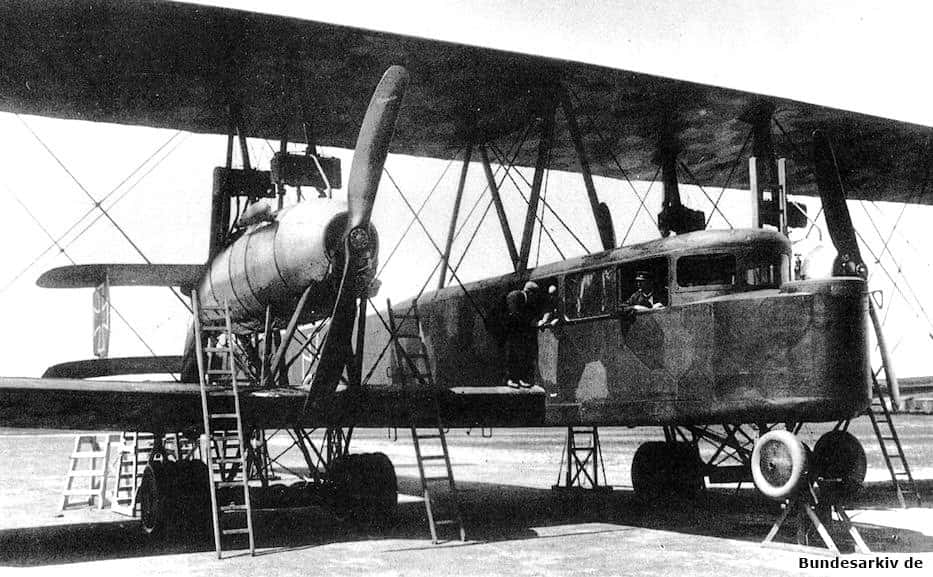
Zeppelin-Staaken R.VI
Kawanishi H8K
This flying boat was primarily used for maritime patrol by the Imperial Japanese Navy. The Kawanishi H8K was designed for long-distance flights and was often flown alone, with no backup, over the ocean. The Americans gave this patrolling plane the nickname “Emily” during the war. Whenever “Emily” was said over the radio, they were referring to the H8K. It was first used in combat in 1942, so the aircraft was only fully operational during the second half of WWII.
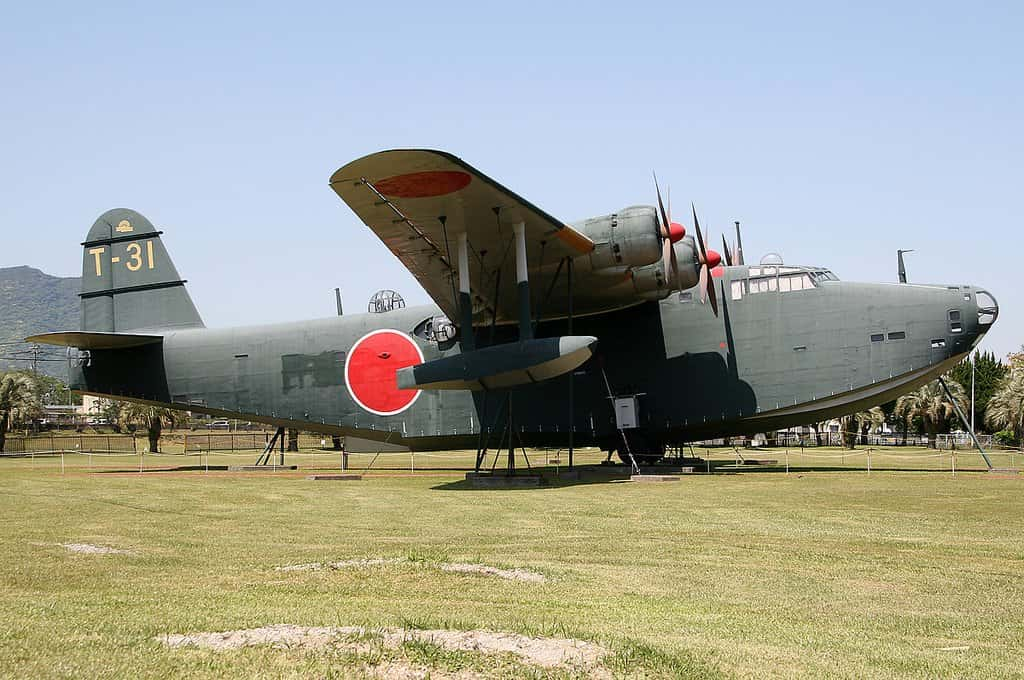
Kawanishi H8K
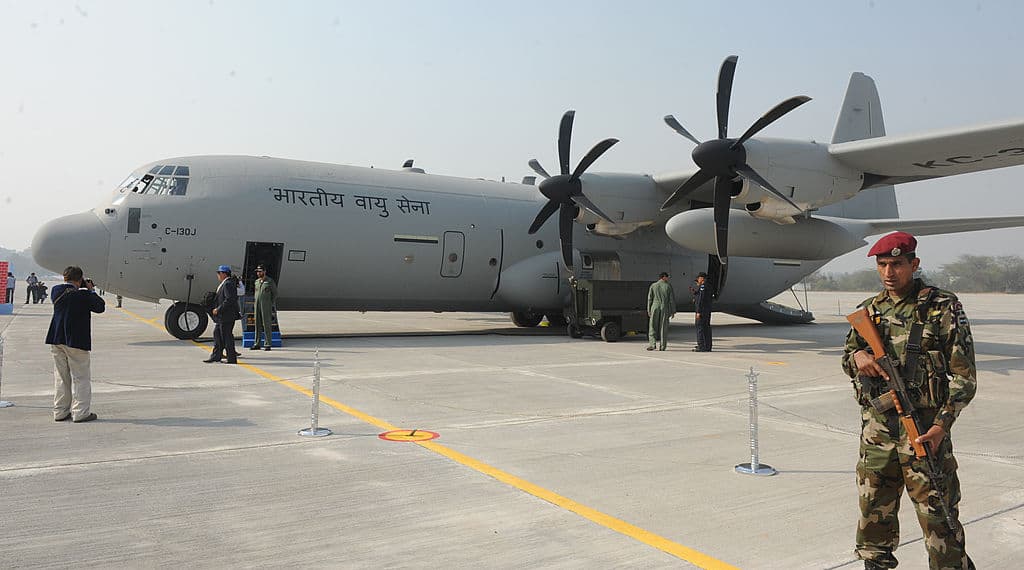
Lockheed Martin C-130J Super Hercules
It can be expected that an aircraft named “Hercules” will be avoided, more so if it is named “Super Hercules.” In 1996, the US Air Force first flew the C-130J. Since then, there have been 15 more countries that have placed orders for the aircraft. This turboprop transport plane has four engines. When it comes to production time, it has outlasted every other military aircraft that has ever been produced. This model may only be roughly two decades old, but the first Hercules flew six decades ago.
Lockheed Martin C-130J Super Hercules
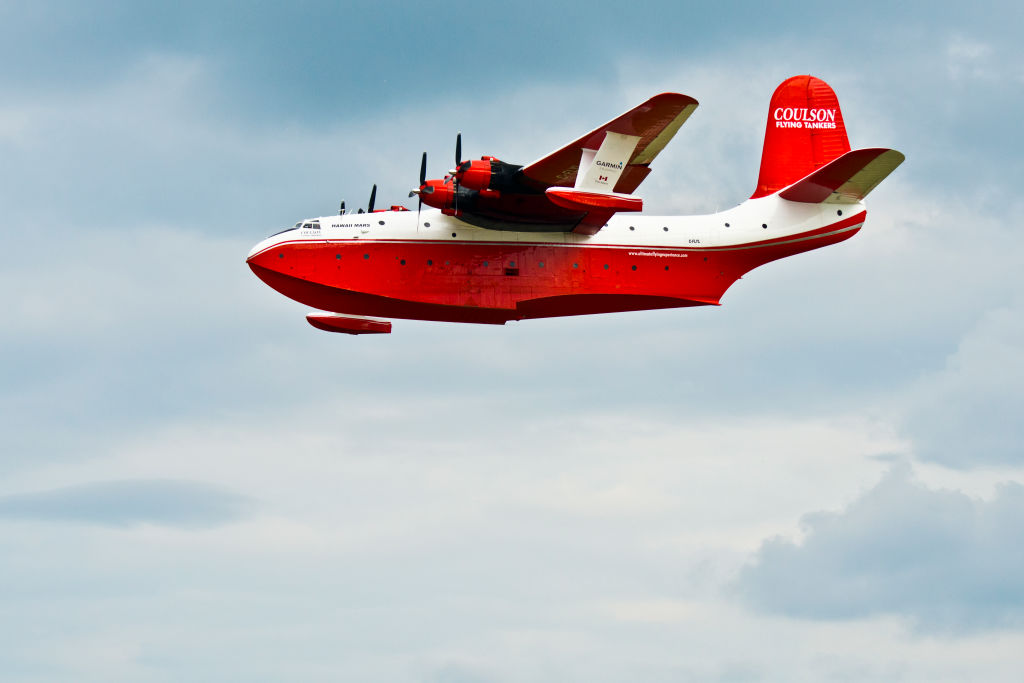
Martin JRM Mars
The four-engine seaplane Martin JRM Mars was popular during World War II. It was the largest seaplane that America and other Allied forces used at the time. There were only seven of these planes ever built, even though they were imposing and effective. After the war, four remaining flying boats were transformed into fire-fighting waterbombers, making the planes even more useful. However, those models are not available anymore.
Martin JRM Mars
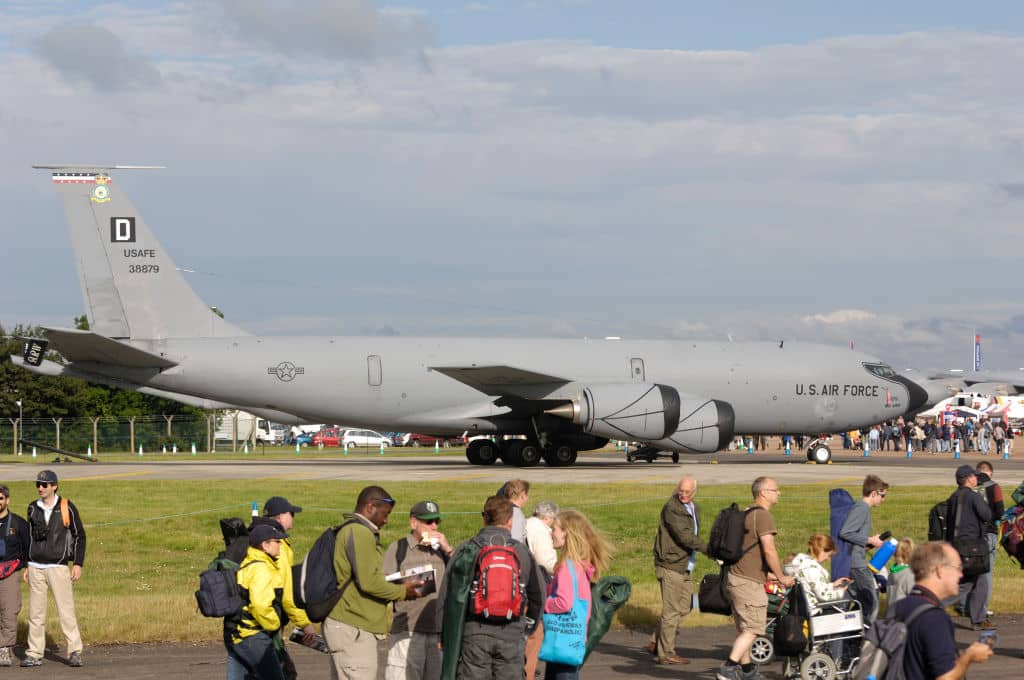
Boeing KC-135 Stratotanker
It is difficult to refuel strategic bombers, but the KC-135 Stratotanker can definitely do the job. During the Vietnam War, the Americans used this aircraft heavily, and during Operation Desert Storm, it was a significant strategic asset. The Boeing 367-80 was developed into the KC-135 and the Boeing 707. The Boeing KC-135 is 136 feet long and was revolutionary because it was the first jet-powered refueling tanker of the United States Air Force.
Boeing KC-135 Stratotanker
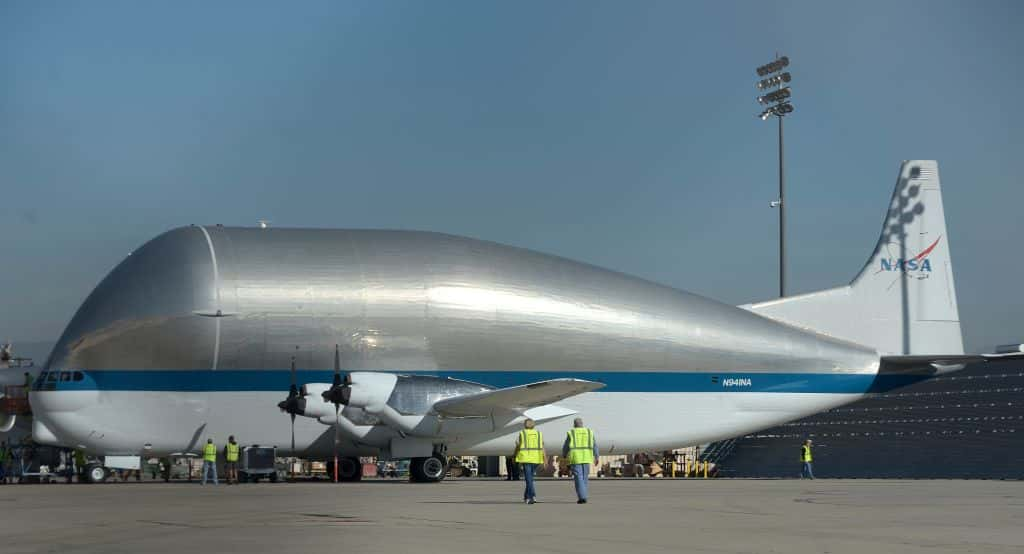
NASA Super Guppy
This plane replaced the Pregnant Guppy. This was the first Guppy aircraft that Aero Spacelines produced. A glance at the plane will tell you that it was made for cargo. There were five planes built for each of the two variants of the Guppy, which were named “Super Guppy.” Today, all of the planes are still in service. We don’t think there is a need to explain how the plane got its name because it’s pretty self-evident.
NASA Super Guppy
Caspian Sea Monster
The Soviet Union developed the Caspian Sea Monster in the 1960s. Extensive testing was done on it until 1980 when a testing accident damaged it. At the time, it was the heaviest and largest aircraft in the world—a title it held for almost two decades. Many US missions during the Cold War had only one goal: to figure out what the Sea Monster is capable of. It always flew at an altitude where aircraft could not be detected, so it was nearly undetectable to many radar systems. Although the Sea Monster was an aircraft, it was the Soviet Navy that used it. However, Soviet Air Force pilots flew it.

Caspian Sea Monster